Struggling to remember complex biological pathways, dense terminology, and interconnected concepts? Biology Mind Map Class 12 by Menonim Menonimus is designed to transform your revision strategy.
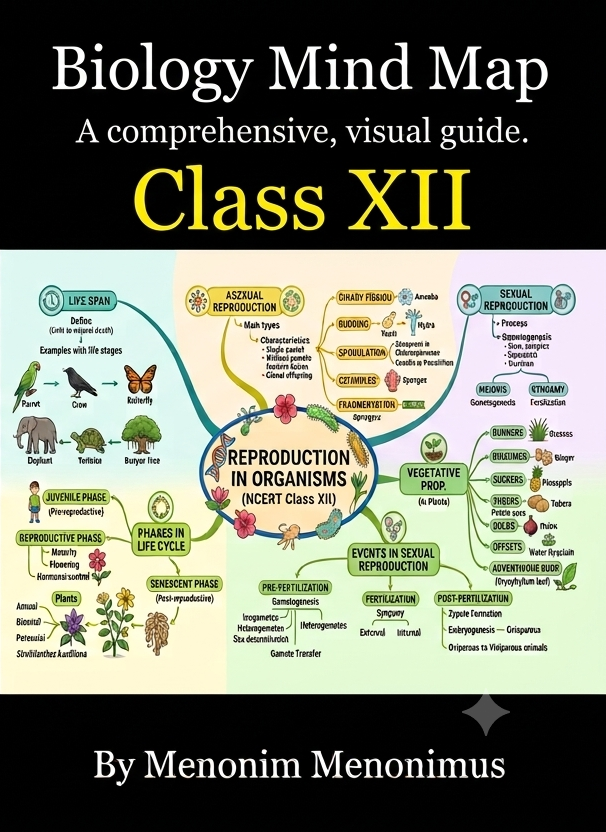
Biology Mind Map Class 12
Comprehensive Visual Revision Guide
By
Menonim Menonimus
BIOLOGY MIND MAP — CLASS XII
A Visual Learning & Rapid Revision Companion
Copyright © 2026 by Menonim Menonimus.
All rights reserved. No part of this publication may be reproduced, distributed, or transmitted in any form or by any means, including photocopying, recording, or other electronic or mechanical methods, without the prior written permission of the author, except in the case of brief quotations embodied in critical reviews and certain other noncommercial uses permitted by copyright law.
New Edition
Paperback ISBN: [Insert ISBN Here]
Published by: Menonim Menonimus / Independently Published via KDP
Cover Design & Mind Maps by: Menonim Menonimus
Disclaimer: This book is intended solely as an educational study aid for Class XII Biology examinations and competitive tests (e.g., NEET-UG). While every effort has been made to ensure complete accuracy, neither the author nor the publisher assumes any responsibility for errors or omissions. Readers are encouraged to reference standard NCERT textbooks for official board specifications.
Table of Contents
| Study Method Guide: How to Master Biology Mind Maps | i |
|
UNIT VI: REPRODUCTION |
1 |
| Chapter 1: Reproduction in Organisms | 2 |
| Chapter 2: Sexual Reproduction in Flowering Plants | 4 |
| Chapter 3: Human Reproduction | 6 |
| Chapter 4: Reproductive Health | 8 |
| UNIT VII: GENETICS AND EVOLUTION | 10 |
| Chapter 5: Principles of Inheritance and Variation | 11 |
| Chapter 6: Molecular Basis of Inheritance | 13 |
| Chapter 7: Evolution | 15 |
| UNIT VIII: BIOLOGY IN HUMAN WELFARE | 17 |
| Chapter 8: Human Health and Disease | 18 |
| Chapter 9: Strategies for Enhancement in Food Production | 20 |
| Chapter 10: Microbes in Human Welfare | 22 |
| UNIT IX: BIOTECHNOLOGY | 24 |
| Chapter 11: Biotechnology – Principles and Processes | 25 |
| Chapter 12: Biotechnology and its Applications | 27 |
| UNIT X: ECOLOGY | 29 |
| Chapter 13: Organisms and Populations | 30 |
| Chapter 14: Ecosystem | 32 |
| Chapter 15: Biodiversity and Conservation | 34 |
| Chapter 16: Environmental Issues | 36 |
Study Method Guide
How to Use Visual Mind Maps for Maximum Retention
Biology is a discipline rich in structural hierarchies, multi-step pathways, and dense terminology. Traditional linear notes often obscure the high-level connections between key concepts. This book utilizes single-page visual mind maps designed specifically to align with Class XII curricula and competitive entrance exams (e.g., NEET-UG).
The 4-Step Revision Protocol
- Step 1: Big-Picture Overview (1 Minute) — Scan the central node of the mind map to establish context. Observe the main branch color-coding to understand how the chapter is divided into primary domains.
- Step 2: Branch Tracing (3–5 Minutes) — Follow each primary branch outward to its secondary nodes and details. Trace metabolic pathways, genetic crosses, or organ systems step-by-step.
- Step 3: Active Recall Test (5 Minutes) — Cover the diagram and try to draw or speak out the major branches from memory. Identify any blind spots immediately.
- Step 4: NCERT Cross-Referencing — Use these maps alongside your standard textbook to consolidate definitions, scientific names, and diagrams prior to board examinations.
| Pro-Tip for NEET & Board Preparation:
• Revise 2 mind maps daily before solving previous years’ question papers. • Pay special attention to boxed sub-types (e.g., Contraceptive methods, STDs, Genetic disorders) as direct objective questions are frequently drawn from these branches. |
For Comfortable Study: Download PDF
UNIT VI: REPRODUCTION
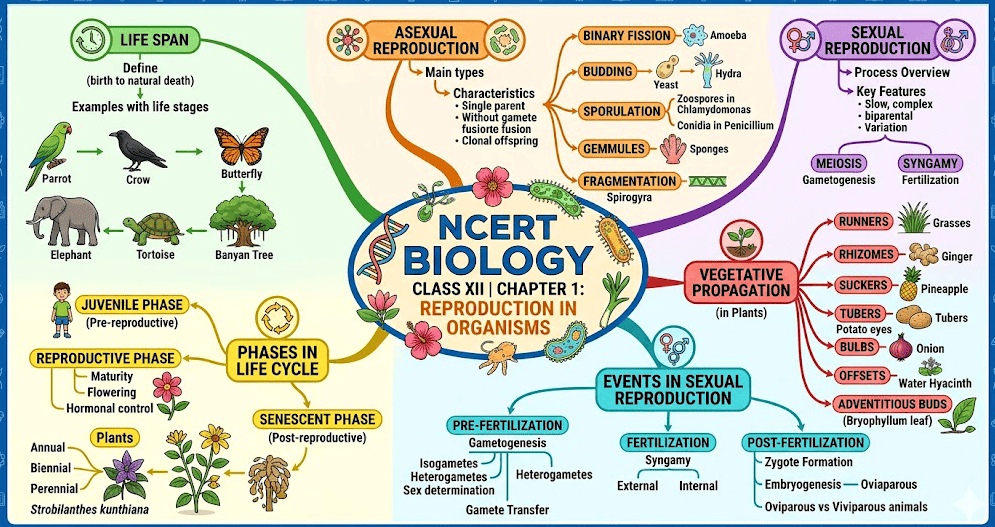
Chapter 1: Reproduction in Organisms
Covers modes of reproduction across organisms, including asexual mechanisms (binary fission, budding, sporulation, gemmules, fragmentation), vegetative propagation in plants (runners, rhizomes, tubers, offsets), and the three key phases of life cycle (Juvenile, Reproductive, Senescent).
| Key Topics Covered in Mind Map:
• Asexual vs Sexual Reproduction • Vegetative Propagules in Plants • Pre-fertilization, Fertilization & Post-fertilization Events |
 |
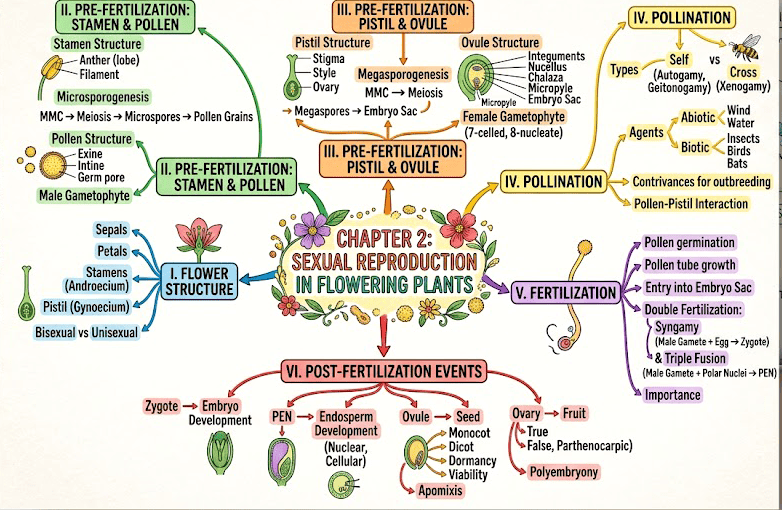
Chapter 2: Sexual Reproduction in Flowering Plants
Detailed visual breakdown of flower anatomy, microsporogenesis, megasporogenesis, pollination mechanisms (abiotic & biotic), pollen-pistil interaction, double fertilization (syngamy & triple fusion), and post-fertilization seed/fruit development.
| Key Topics Covered in Mind Map:
• Stamen & Pollen Grain Development • Pistil, Ovule & Embryo Sac Structure • Pollination Types & Agents • Double Fertilization & Endosperm Formation |
 |
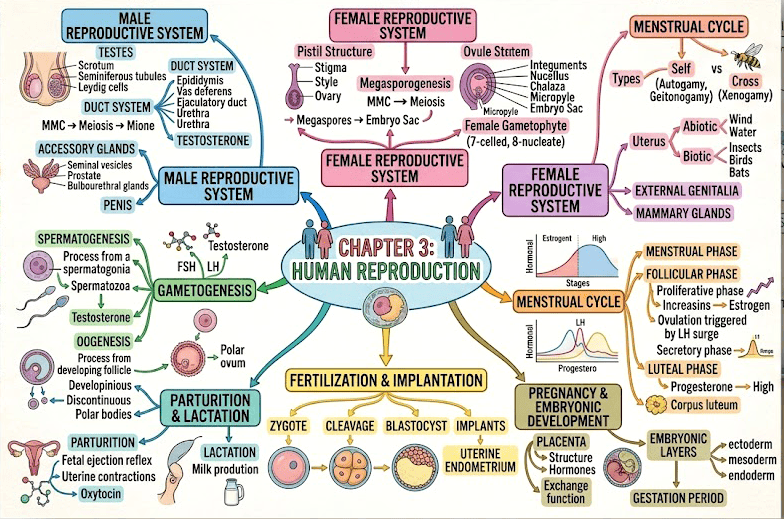
Chapter 3: Human Reproduction
Comprehensive layout of the male and female reproductive systems, gametogenesis (spermatogenesis & oogenesis), hormonal regulation of the menstrual cycle, fertilization, implantation, pregnancy, and lactation.
| Key Topics Covered in Mind Map:
• Male & Female Anatomy & Accessory Glands • Spermatogenesis vs Oogenesis • Hormonal Control of Menstrual Cycle (LH Surge) • Pregnancy, Placenta & Parturition |
 |
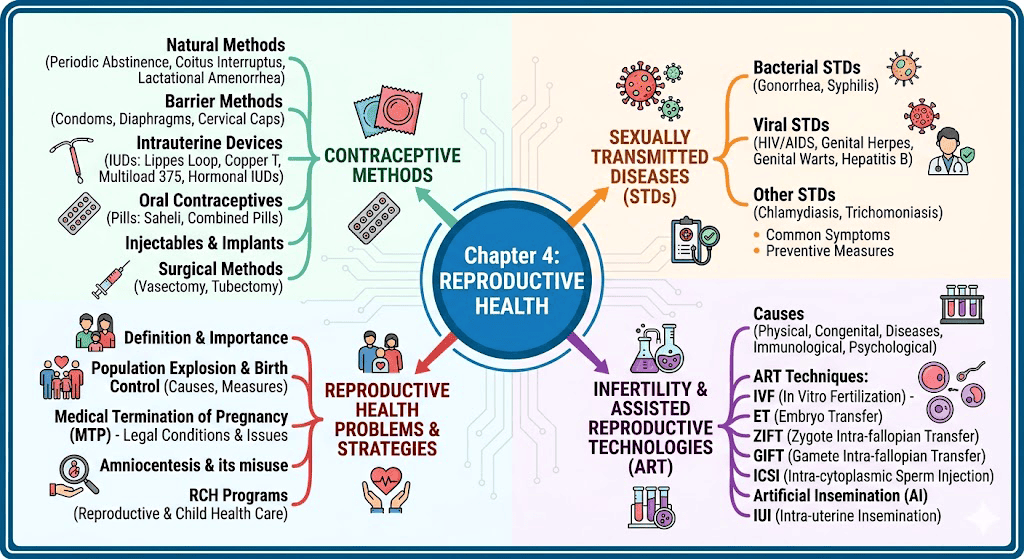
Chapter 4: Reproductive Health
Overview of reproductive health strategies, population control, contraceptive methods (natural, barrier, IUDs, oral pills, surgical), MTP legal aspects, sexually transmitted infections (STDs), and Assisted Reproductive Technologies (ART).
| Key Topics Covered in Mind Map:
• Contraceptive Methods & Devices • STDs (Bacterial, Viral, Protozoan) • Infertility & ART (IVF, ZIFT, GIFT, ICSI, IUI) |
 |
For Comfortable Study: Download PDF
UNIT VII: GENETICS AND EVOLUTION
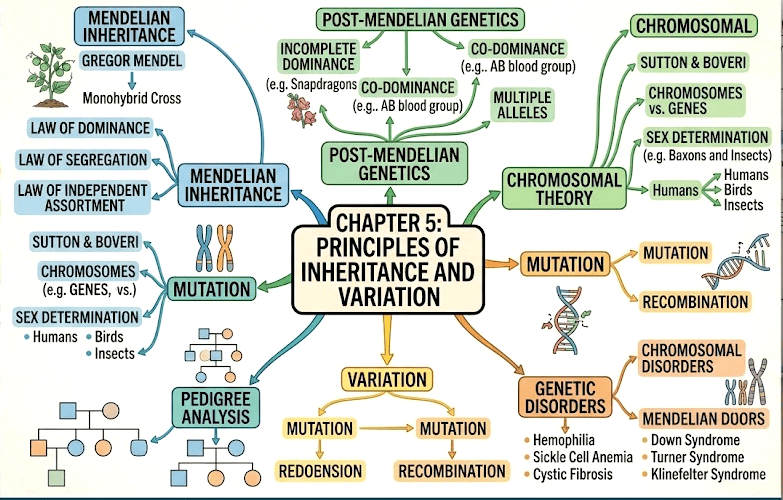
Chapter 5: Principles of Inheritance and Variation
Visual synthesis of Mendelian genetics, post-Mendelian discoveries (incomplete dominance, co-dominance, multiple alleles), Chromosomal Theory of Inheritance, sex determination mechanisms, pedigree analysis, and genetic disorders.
| Key Topics Covered in Mind Map:
• Mendelian Laws & Monohybrid/Dihybrid Crosses • Co-dominance & Blood Groups • Sex Determination in Humans, Birds & Insects • Mendelian vs Chromosomal Disorders |
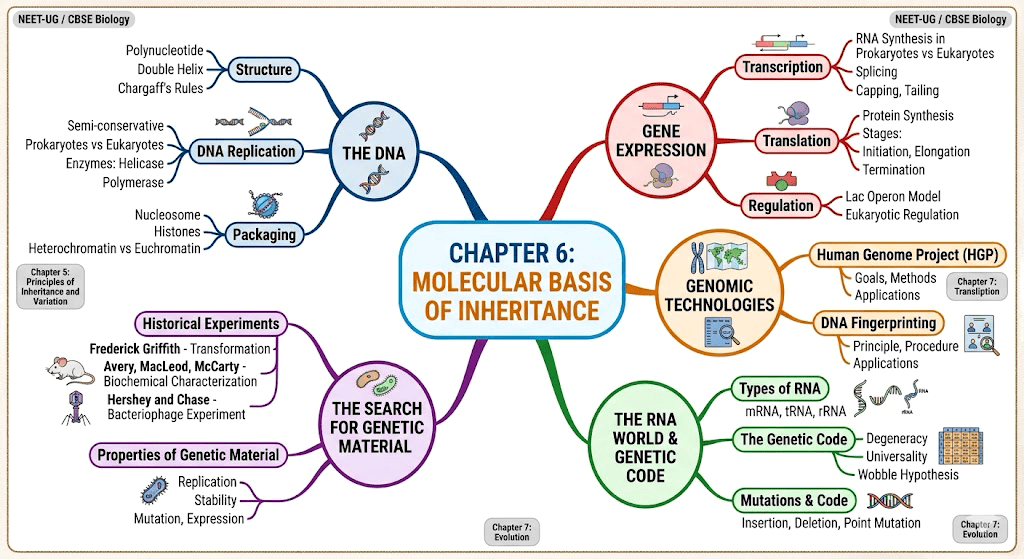
Chapter 6: Molecular Basis of Inheritance
Detailed mapping of DNA structure, packaging (nucleosome), replication machinery, central dogma processes (transcription & translation), lac operon regulation, Human Genome Project (HGP), and DNA fingerprinting.
| Key Topics Covered in Mind Map:
• DNA Double Helix & Packaging • Replication & Transcription Machinery • Genetic Code & Translation • Lac Operon & DNA Fingerprinting |
 |
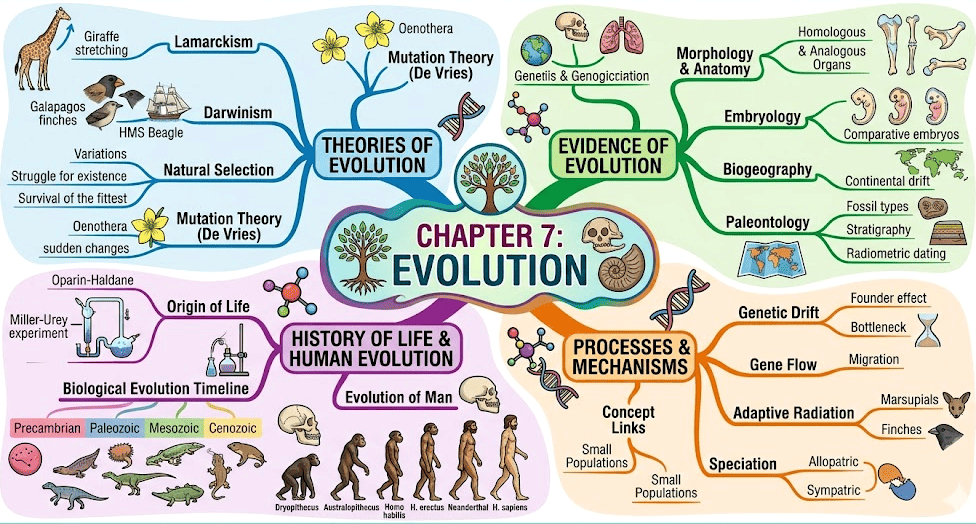
Chapter 7: Evolution
Covers theories of evolution (Lamarckism, Darwinism, Mutation Theory), evidence from anatomy, embryology, and paleontology, mechanisms like genetic drift and natural selection, adaptive radiation, and human evolution timeline.
| Key Topics Covered in Mind Map:
• Theories & Evidence of Evolution • Hardy-Weinberg Principle & Genetic Drift • Adaptive Radiation Examples • Human Evolutionary History |
 |
For Comfortable Study: Download PDF
UNIT VIII: BIOLOGY IN HUMAN WELFARE
Chapter 8: Human Health and Disease
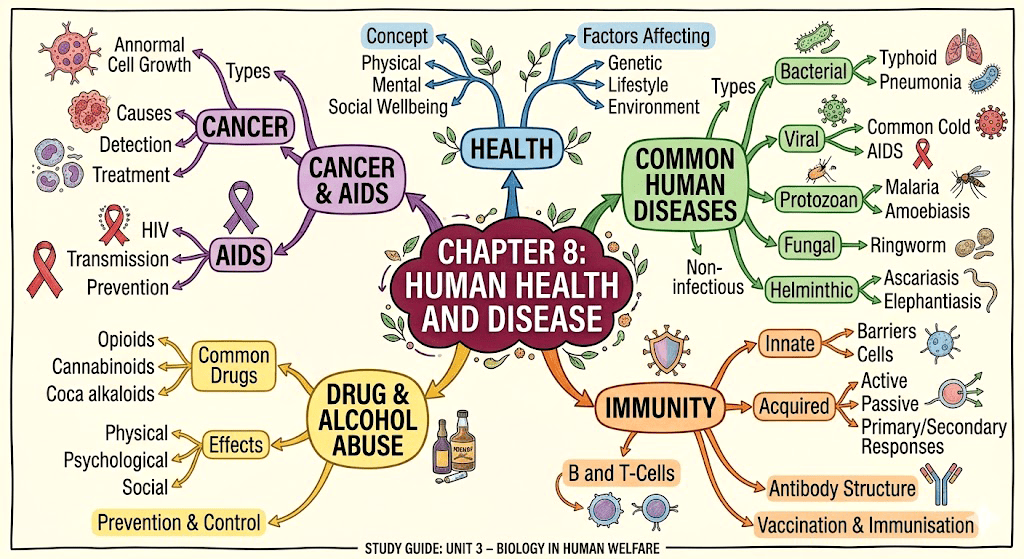
Comprehensive chart of common human pathogens, immunity mechanisms (innate vs acquired, B/T-cells, antibody structure), vaccination, cancer, AIDS, and drug/alcohol abuse categories.
| Key Topics Covered in Mind Map:
• Bacterial, Viral, Protozoan & Fungal Diseases • Innate & Acquired Immunity • Cancer Detection & Treatment • Drug & Alcohol Abuse Factors |
 |
Chapter 9: Strategies for Enhancement in Food Production
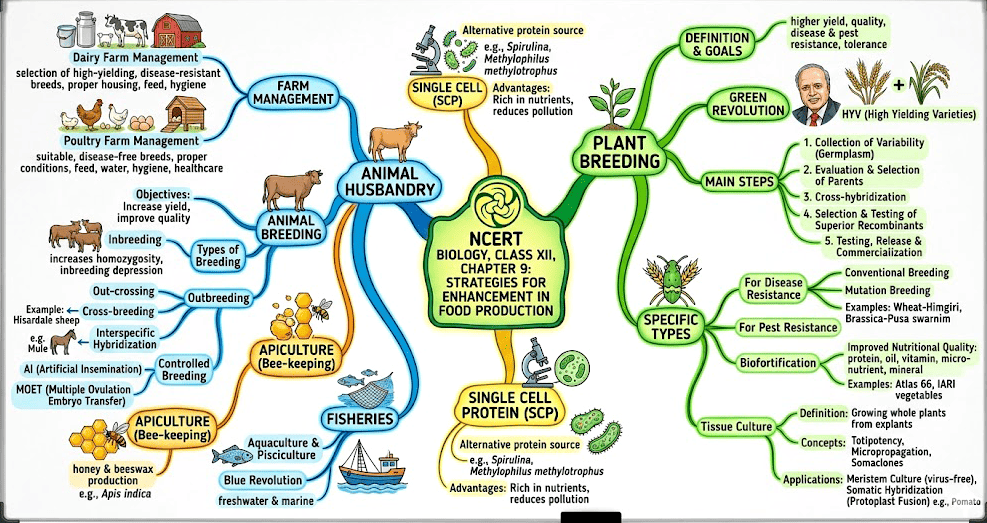
Overview of animal husbandry, plant breeding steps, tissue culture, biofortification, apiculture, fisheries, and Single Cell Protein (SCP) production.
| Key Topics Covered in Mind Map:
• Animal Breeding & MOET • Plant Breeding for Disease/Pest Resistance • Tissue Culture & Micropropagation • Single Cell Protein (SCP) |
 |
Chapter 10: Microbes in Human Welfare
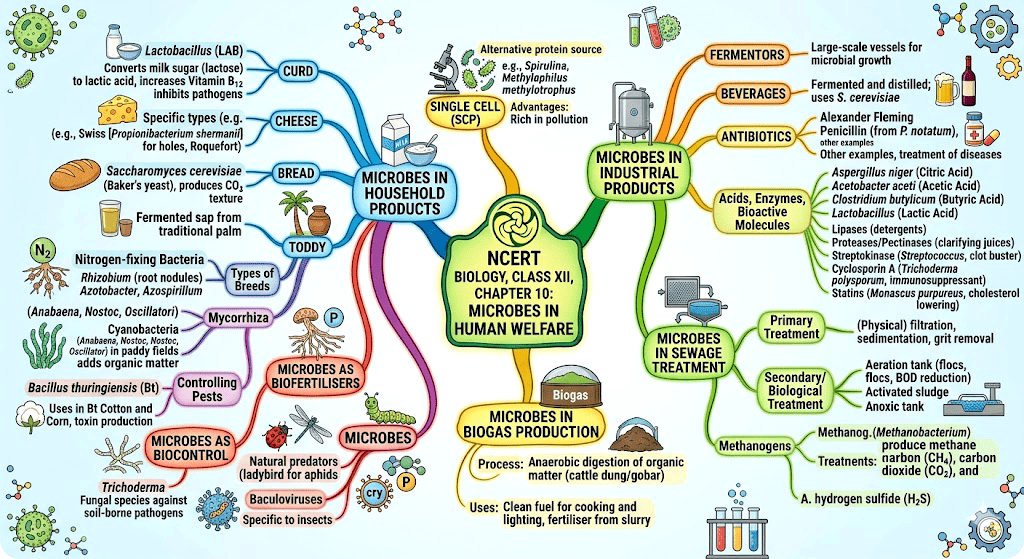
Detailed summary of microbial applications in household products, industrial fermentation, sewage treatment plants (STP), biogas generation, biocontrol agents, and biofertilizers.
| Key Topics Covered in Mind Map:
• Microbes in Household & Industry • Sewage Treatment (Primary vs Secondary) • Biogas Production Steps • Biocontrol Agents & Biofertilizers |
 |
UNIT IX: BIOTECHNOLOGY
Chapter 11: Biotechnology – Principles and Processes
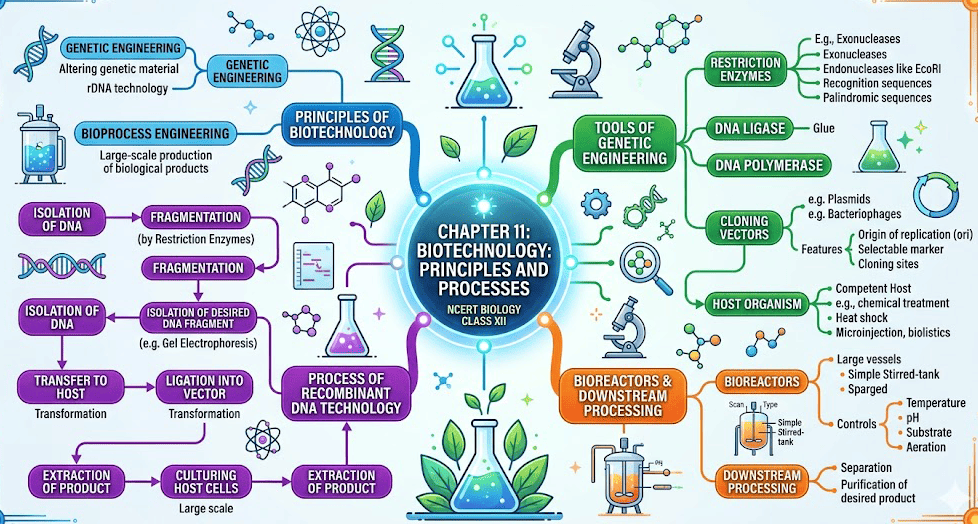
Covers recombinant DNA technology core tools (restriction enzymes, vectors, competent hosts) and process steps (isolation, PCR amplification, bioreactors, downstream processing).
| Key Topics Covered in Mind Map:
• Restriction Enzymes & Cloning Vectors • Polymerase Chain Reaction (PCR) Steps • Bioreactor Types & Downstream Processing |
 |
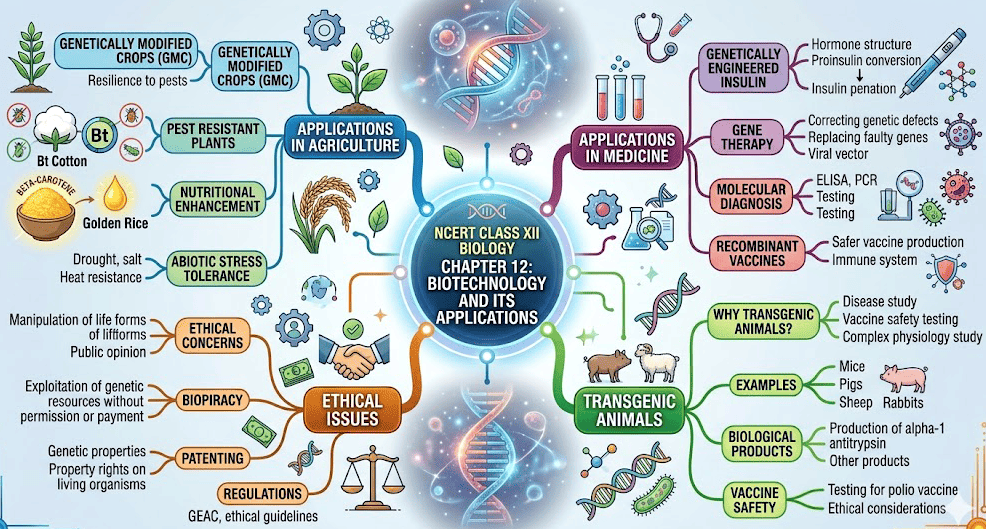
Chapter 12: Biotechnology and its Applications
Focuses on agricultural applications (Bt cotton, RNAi pest control), medical applications (genetically engineered insulin, gene therapy), transgenic animals, and ethical/patent issues.
| Key Topics Covered in Mind Map:
• Bt Cotton & Pest Resistant Plants • Genetically Engineered Insulin & Gene Therapy • Transgenic Animals & Biopiracy |
 |
For Comfortable Study: Download PDF
UNIT X: ECOLOGY
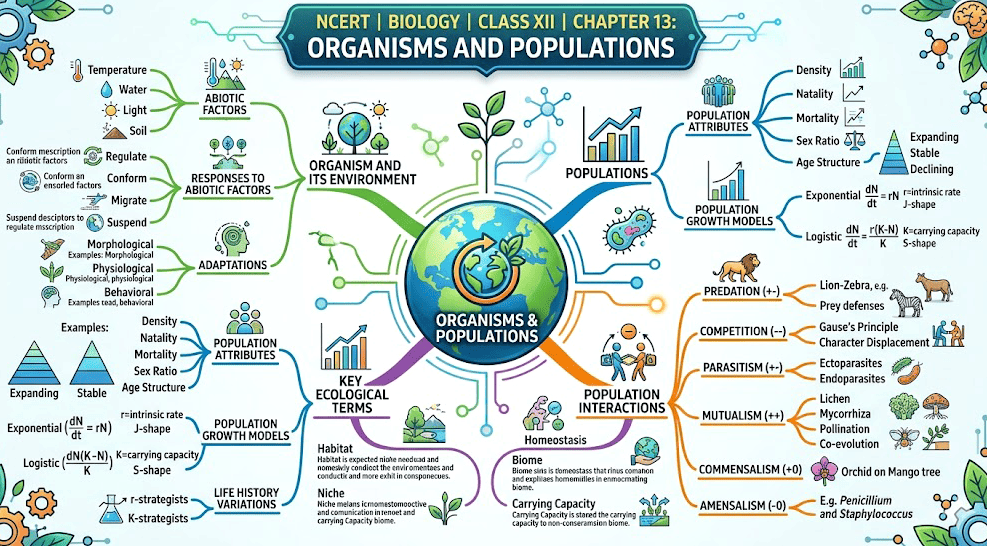
Chapter 13: Organisms and Populations
Organismal adaptation, major abiotic factors, population attributes, growth models (exponential vs logistic), and interspecific population interactions.
| Key Topics Covered in Mind Map:
• Abiotic Factors & Adaptations • Population Growth Curves (Logistic vs Exponential) • Population Interactions (Mutualism, Parasitism, etc.) |
 |
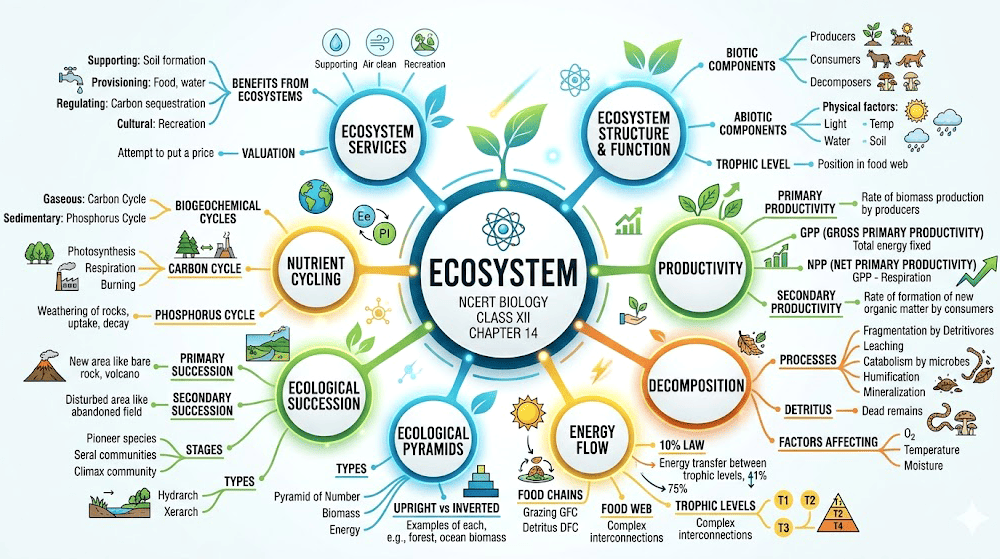
Chapter 14: Ecosystem
Ecosystem structure, primary productivity, decomposition steps, energy flow (10% law), ecological pyramids, and ecological succession.
| Key Topics Covered in Mind Map:
• Productivity & Decomposition • Energy Flow & Trophic Levels • Ecological Pyramids (Number, Biomass, Energy) |
 |
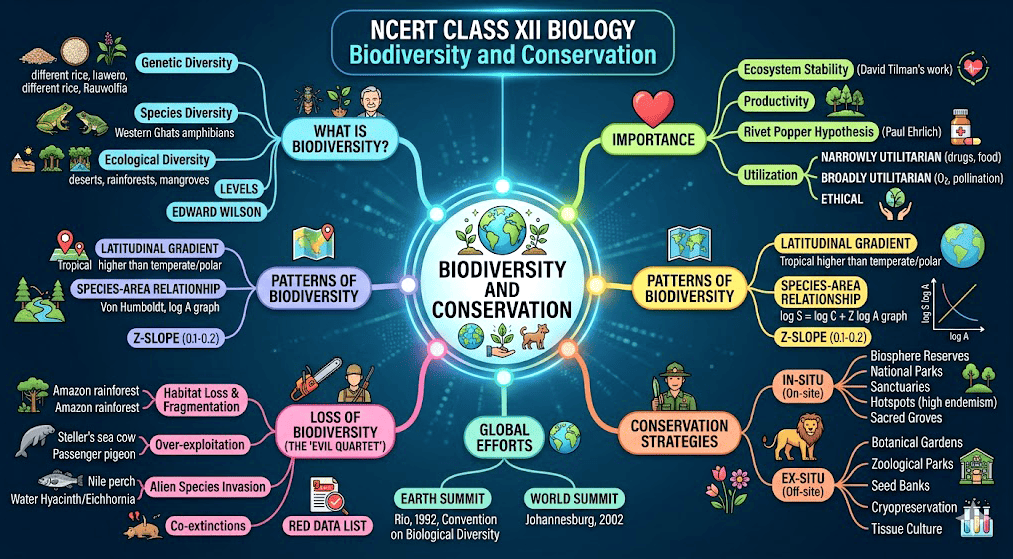
Chapter 15: Biodiversity and Conservation
Patterns of biodiversity, species-area relationships, causes of biodiversity loss (Evil Quartet), and conservation strategies (In-situ vs Ex-situ).
| Key Topics Covered in Mind Map:
• Levels of Biodiversity & Species-Area Curve • The Evil Quartet (Loss Factors) • In-situ vs Ex-situ Conservation |
 |
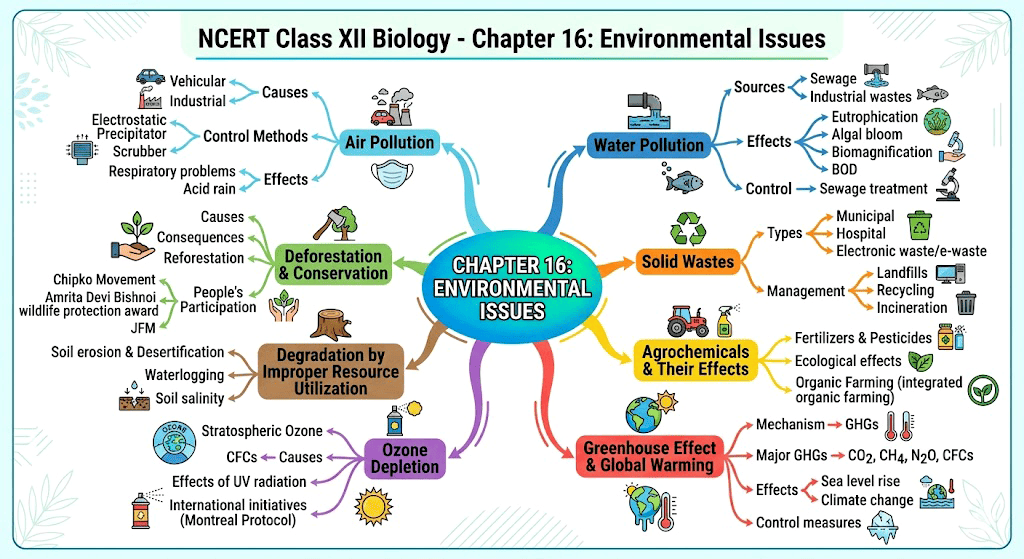
Chapter 16: Environmental Issues
Comprehensive mapping of air pollution, water pollution (eutrophication, biomagnification), solid waste, ozone depletion, greenhouse effect, and deforestation.
| Key Topics Covered in Mind Map:
• Air & Water Pollution Control • Biomagnification & Eutrophication • Ozone Depletion & Greenhouse Effect |
 |
For Comfortable Study: Download PDF
N.B. Your feedback matters to us. If Biology Mind Map Class XII supported your studies, please share your thoughts at [email protected].
The End