Freedom Justice and the Nature of Human Society. Freedom justice, and the nature of human society are closely connected ideas that shape human life. Every individual seeks the opportunity to live with dignity, make personal choices, and enjoy equal rights. Keep reading, ‘Freedom Justice and the Nature of Human Society’.
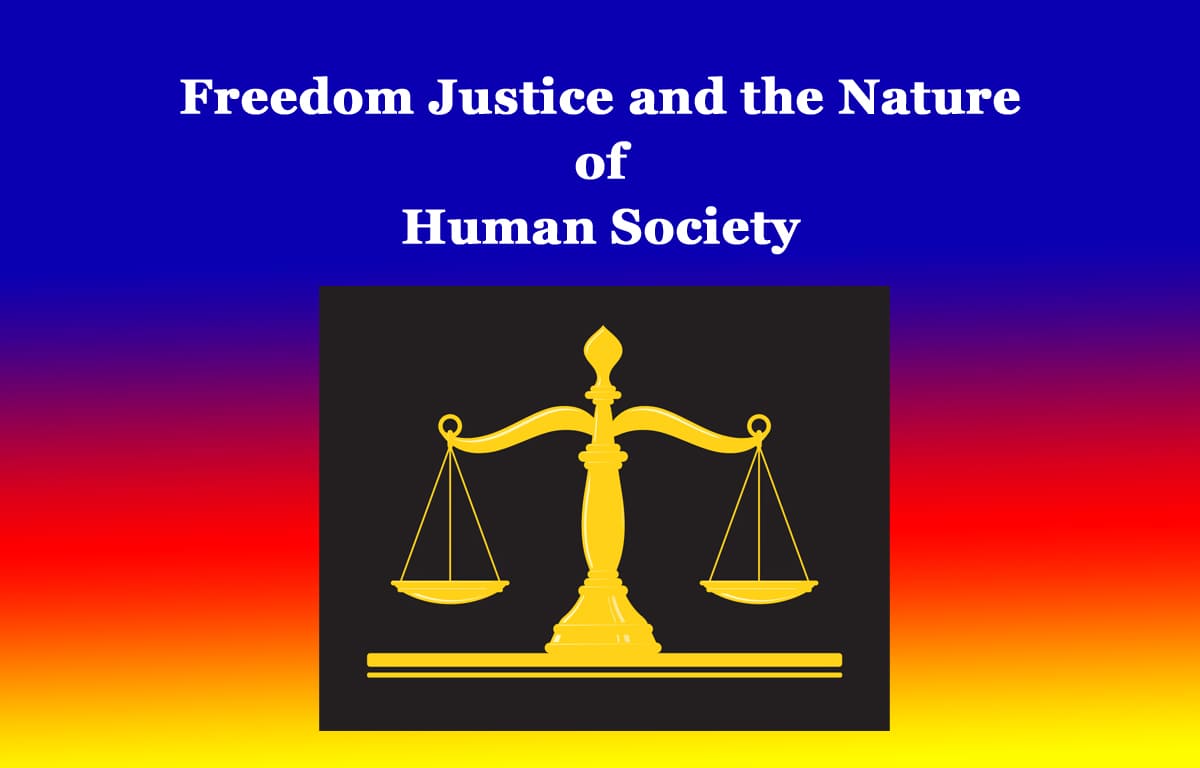
Freedom Justice and the Nature of Human Society
Introduction
Freedom, justice, and the nature of human society are closely connected ideas that shape human life. Every individual seeks the opportunity to live with dignity, make personal choices, and enjoy equal rights. At the same time, people depend on one another and must follow certain rules to maintain peace, security, and social order. These needs raise important questions about how much freedom individuals should have, how justice should be maintained, and what kind of society people should build together.
Human society is not merely a collection of individuals living in the same place. It is a network of relationships, institutions, responsibilities, and shared values. Freedom enables people to make choices, justice protects their rights and promotes fairness, and social cooperation helps communities function effectively. When these principles support one another, society has a stronger foundation for peace, equality, and human development.
1. Understanding the Meaning of Freedom
Freedom is the ability to think, speak, believe, and act without unnecessary restrictions. It allows individuals to make decisions about their lives, express their opinions, pursue their interests, and develop their abilities. Freedom is an essential part of human dignity because it recognizes that people should have a meaningful role in determining their own lives.
However, freedom does not mean that individuals can do anything they wish without considering the consequences. Every person lives among others who also possess rights and freedoms. Therefore, the exercise of freedom must take account of the safety, dignity, and legitimate interests of other people.
A free society allows individuals to make personal choices while protecting everyone from coercion, discrimination, and unjust treatment. True freedom requires not only the absence of unnecessary restrictions but also the protection of the rights that enable people to live independently and responsibly.
2. Understanding the Meaning of Justice
Justice refers to fairness in how individuals are treated and how rights, duties, opportunities, and responsibilities are distributed. It requires that people be treated according to fair principles rather than prejudice, personal favour, wealth, or social status.
Justice is important in courts, schools, workplaces, governments, and everyday relationships. For example, students should be assessed according to fair standards, workers should receive lawful and fair treatment, and citizens should have access to impartial legal protection.
Justice does not always mean treating every person in the same way. Sometimes, fairness requires recognizing different circumstances and addressing particular disadvantages. The central aim is to ensure that decisions are reasonable, rights are respected, and no person is unfairly denied dignity or opportunity.
3. The Nature of Human Society
Human society develops through relationships among individuals, families, communities, and institutions. People cooperate to meet their needs, share knowledge, produce goods, establish rules, and preserve cultural traditions. Through social life, individuals learn language, customs, values, and ways of understanding the world.
Society also influences how people behave and think. Families and educational institutions teach social responsibilities, while laws and public institutions establish rules for collective life. Cultural traditions may strengthen belonging and cooperation, although some traditions can also preserve unfair practices.
Human society is therefore both cooperative and complex. People depend on one another, but they may also disagree over resources, beliefs, interests, and power. Freedom and justice help societies manage these differences without allowing conflict or authority to destroy individual dignity.
4. The Relationship Between Freedom and Justice
Freedom and justice are closely related because freedom becomes meaningful when people’s rights are protected fairly. A person may formally possess freedom of speech, for example, but that freedom has little practical value if they are punished unfairly for expressing a peaceful opinion.
Similarly, justice requires a reasonable degree of freedom. People need opportunities to speak, participate, question decisions, and seek remedies when they believe they have been treated unfairly.
Freedom without justice may allow powerful individuals to dominate weaker groups. Justice without adequate freedom may become a system of excessive control in which people cannot express their views or challenge unfair decisions. A fair society must therefore protect both individual liberty and the rights of others.
5. Why Freedom Is Essential for Human Development
Freedom allows individuals to explore their interests, develop their abilities, and make choices that reflect their values. It encourages creativity, learning, independent thought, and personal responsibility.
For example, students benefit when they can ask questions, examine different ideas, and choose areas of study according to their interests and abilities. Artists and writers need freedom to express ideas, while researchers need opportunities to investigate questions and examine evidence.
Freedom also allows people to question existing practices and suggest improvements. Without reasonable freedom, individuals may become afraid to express their ideas or develop their potential. A society that respects freedom can benefit from the knowledge, creativity, and initiative of its members.
6. Why Justice Is Necessary for Social Stability
Justice helps people trust social institutions and one another. When rules are applied fairly and decisions are made impartially, individuals are more likely to believe that their rights will be respected.
In contrast, unfair treatment can create resentment, distrust, and conflict. If people believe that wealth or influence determines the outcome of every dispute, they may lose confidence in public institutions.
Justice helps establish peaceful methods for resolving disagreements. Courts, fair administrative procedures, transparent rules, and effective systems for protecting rights can reduce the likelihood that disputes will be settled through intimidation or violence. Justice is therefore important not only for individuals but also for the stability and legitimacy of society.
7. Equality and Human Dignity
Equality means recognizing that all human beings possess equal moral worth and deserve respect. No person should be treated as inferior simply because of their social background, economic position, gender, disability, language, or other personal characteristic.
Human dignity is closely connected with equality. It requires that people be treated as individuals whose rights and experiences matter. Discrimination can prevent people from accessing education, employment, healthcare, justice, and participation in public life.
A just society seeks to remove unfair barriers and ensure that individuals have meaningful opportunities to develop their abilities. This does not mean that everyone will have identical lives or outcomes. It means that differences should not be used as an excuse to deny people equal rights or basic respect.
8. The Importance of Human Rights
Human rights are basic rights and freedoms that belong to every person because they are human. They include rights relating to life, liberty, equality, education, privacy, and freedom of expression, among others.
These rights establish standards for how individuals, institutions, and governments should treat people. They also provide a basis for challenging unfair treatment and demanding accountability.
Human rights are especially important for individuals and groups who may have limited social or political power. Protecting these rights helps prevent arbitrary authority and encourages institutions to act fairly. A society that respects human rights recognizes that the dignity of individuals must not depend entirely on their wealth, popularity, or position.
9. Freedom of Thought and Expression
Freedom of thought and expression allows people to form opinions, exchange ideas, criticize policies, and participate in public discussions. It is essential for education, scientific progress, cultural development, and democratic participation.
People may hold different opinions about religion, politics, morality, economics, and social change. Peaceful discussion enables them to explain their views, examine evidence, and learn from opposing perspectives.
However, freedom of expression also raises questions about responsibility. Threats, harassment, and deliberate attempts to intimidate others can undermine their ability to participate freely. A healthy society protects open discussion while addressing genuine harms through fair and proportionate rules.
10. The Rule of Law
The rule of law means that laws should govern public life and that no individual should be above the law. Government officials, powerful organizations, and ordinary citizens should all be subject to lawful standards and fair procedures.
The rule of law helps protect people against arbitrary decisions. It requires legal processes to be reasonably clear, accessible, and consistently applied. It also depends on independent courts, accountable institutions, and the opportunity to challenge unlawful actions.
Laws alone, however, do not automatically guarantee justice. Laws can be poorly designed or unfairly enforced. A just legal system must therefore protect fundamental rights, provide impartial procedures, and allow unjust practices to be challenged and reformed.
11. The Role of Government in Protecting Freedom and Justice
Governments have important responsibilities in protecting rights, maintaining public order, providing essential services, and establishing fair legal institutions. They create and enforce laws, administer public resources, and make decisions that affect the lives of citizens.
Government power is necessary for many collective purposes, but it can also be misused. Therefore, it should be limited by law, subject to oversight, and open to public scrutiny.
Constitutions, independent courts, representative institutions, transparent procedures, and free public discussion can help prevent the concentration of unchecked power. A responsible government should protect individual freedoms while taking reasonable steps to maintain safety, equality, and social well-being.
12. Democracy and Citizen Participation
Democracy is a form of government in which political authority is based on the participation and consent of the people, expressed through established democratic processes. It gives citizens opportunities to influence public decisions, elect representatives, and hold leaders accountable.
Democracy is not limited to voting. It also depends on access to reliable information, freedom of expression, public debate, equal political rights, and respect for lawful opposition. Citizens need opportunities to question government decisions and participate in discussions about matters affecting their communities.
Democratic institutions can help balance freedom and justice by providing peaceful methods for resolving political disagreements. However, democracy works best when majority decisions also respect the fundamental rights of minorities and individuals.
13. Social Responsibility and Individual Freedom
Freedom gives individuals opportunities to make choices, but it also requires awareness of how those choices affect others. Social responsibility means considering the rights, needs, and well-being of other people when making decisions.
For example, people may express their opinions freely, but they should also avoid knowingly spreading harmful falsehoods or using intimidation to silence others. Citizens may enjoy public spaces, but they also have a responsibility to respect shared property and follow fair rules designed to protect everyone.
Social responsibility does not mean unquestioningly accepting every social expectation. Individuals may need to challenge unfair rules and practices. Responsible freedom combines independent judgment with respect for the dignity and rights of others.
14. The Problem of Inequality
Inequality exists when people have significantly different access to resources, opportunities, influence, or social advantages. Some differences result from personal choices and circumstances, while others arise from structural barriers, discrimination, inherited disadvantage, or unequal access to education and employment.
Extreme or persistent inequality can weaken social trust and limit people’s ability to participate fully in society. A person who lacks adequate education, healthcare, housing, or economic security may have fewer practical opportunities to exercise freedom.
Addressing inequality may involve improving public services, removing discriminatory barriers, ensuring fair employment practices, and creating opportunities for disadvantaged communities. The aim is not necessarily to make every person’s circumstances identical but to protect equal rights and expand meaningful opportunities.
15. Poverty and the Limits of Freedom
Poverty can restrict freedom in practical ways. People who struggle to obtain food, housing, healthcare, or education may have limited choices even when their legal rights are formally protected.
For example, a student may have the ability to pursue higher education in principle but may lack the financial resources or institutional support needed to do so. Similarly, a worker facing severe economic insecurity may find it difficult to refuse unfair working conditions.
This shows that freedom has both legal and practical dimensions. Protecting rights is essential, but improving access to education, essential services, and fair economic opportunities can also help people exercise their freedoms more effectively.
16. Education as a Foundation of Freedom and Justice
Education helps individuals understand their rights, responsibilities, and opportunities. It develops critical thinking, communication skills, and the ability to evaluate information.
An educated person may be better prepared to recognize discrimination, question misleading claims, understand legal procedures, and participate in public discussions. Education can also encourage empathy by exposing students to different experiences, cultures, and perspectives.
However, education itself must be accessible and fair. If quality education is available only to a privileged section of society, it may reproduce existing inequalities. A just educational system seeks to provide meaningful learning opportunities to people from different backgrounds.
17. The Influence of Culture and Tradition
Culture and tradition shape social identity, values, behaviour, and relationships. They can preserve knowledge, strengthen community bonds, and provide a sense of belonging across generations.
At the same time, traditions are not beyond criticism. Some inherited practices may conflict with individual freedom, equality, or human dignity. A society must be able to examine its customs thoughtfully rather than assuming that everything inherited from the past is necessarily fair.
Respecting culture does not require accepting every practice without question. Communities can preserve valuable traditions while reforming those that cause unjust harm. This process allows culture to remain meaningful while responding to changing knowledge and ethical understanding.
18. Social Conflict and the Need for Justice
Conflict is a normal feature of human society because individuals and groups have different interests, needs, beliefs, and expectations. Disagreements may arise over land, employment, resources, political decisions, religious differences, or personal relationships.
The existence of conflict does not necessarily mean that society has failed. The important question is how conflicts are handled. Peaceful negotiation, impartial legal procedures, open discussion, and respect for rights can help resolve disagreements without unnecessary harm.
Justice is particularly important when there is an imbalance of power between the parties involved. Fair procedures help ensure that disputes are not decided solely by wealth, influence, or force.
19. The Relationship Between Rights and Duties
Rights and duties are both important parts of social life. Rights protect individual freedoms and establish what people may legitimately claim. Duties refer to responsibilities that individuals have toward others and the wider community.
For example, freedom of expression protects the ability to share opinions, while social responsibility encourages people to communicate without intimidation or deliberate deception. The right to use public facilities also comes with a responsibility to respect shared property and other people’s access.
However, rights should not be treated as rewards that people receive only after fulfilling every social expectation. Basic human rights remain essential protections. Duties should support the fair enjoyment of rights rather than become excuses for denying them.
20. The Nature of Power in Human Society
Power is the ability to influence decisions, behaviour, resources, or social outcomes. It exists in governments, businesses, families, educational institutions, and community organizations.
Power can be used constructively to organize cooperation, protect vulnerable people, and solve shared problems. However, when power is concentrated without adequate accountability, it may be used to exploit others, suppress criticism, or preserve unfair advantages.
Freedom and justice require systems that limit the misuse of power. Transparent decision-making, fair procedures, independent oversight, and opportunities for people to challenge authority can help ensure that power serves legitimate social purposes.
21. Justice and the Protection of Minorities
A just society must protect the rights of individuals and minority groups, even when their beliefs, identities, or interests differ from those of the majority. Majority opinion can play an important role in democratic decision-making, but it should not automatically determine every question of rights.
Without adequate protection, minority groups may face discrimination, exclusion, or restrictions on their freedoms. Legal safeguards, equal access to public institutions, and opportunities for representation can help prevent such outcomes.
Respecting minority rights does not require people to agree with every belief or practice. It requires recognizing the equal dignity of individuals and protecting their legitimate freedoms within a fair legal framework.
22. The Importance of Tolerance and Mutual Respect
Tolerance means accepting that people may hold different beliefs, opinions, and ways of life. Mutual respect goes further by recognizing that disagreements do not remove a person’s dignity or right to fair treatment.
In a diverse society, people may differ in language, religion, culture, political views, and personal values. These differences can lead to misunderstandings, but they can also create opportunities for learning and cooperation.
Tolerance does not require accepting violence, coercion, or discrimination. Instead, it encourages people to resolve disagreements through reasoned discussion and fair procedures. Mutual respect helps create an environment in which individuals can live together without demanding that everyone think alike.
23. The Role of Science and Reason
Science and rational inquiry help people examine claims, understand evidence, and improve their knowledge of the world. They can also contribute to better public decisions by identifying social problems and evaluating possible solutions.
Reason is important when considering questions of justice because emotional reactions, prejudice, and misinformation can lead to unfair judgments. Evidence, logical analysis, and open discussion help people assess whether policies are effective and whether their consequences are distributed fairly.
Science alone cannot settle every moral or political question. Decisions about justice also involve values, rights, and judgments about what society ought to protect. Rational inquiry is most useful when combined with ethical reflection and respect for human dignity.
24. Freedom, Justice, and Economic Life
Economic life influences the practical opportunities available to individuals. Access to employment, fair wages, safe working conditions, and reasonable opportunities for advancement can affect people’s independence and well-being.
Freedom in economic life includes the ability to pursue occupations, develop businesses, choose among lawful opportunities, and make personal financial decisions. Justice requires that these freedoms operate within fair rules that protect people against exploitation, discrimination, and fraud.
A society must therefore consider both economic initiative and social protection. Economic activity can generate innovation and prosperity, but institutions are also needed to ensure that people are treated fairly and that essential rights are not sacrificed for financial gain.
25. Human Society as a Changing System
Human society is not fixed or unchanging. It develops as people acquire new knowledge, adopt technologies, establish institutions, and reconsider their values. Ideas about freedom and justice have changed across history as people have challenged unfair laws and demanded broader recognition of rights.
Social progress often results from cooperation among citizens, educators, reformers, public institutions, and community organizations. Change may be gradual, and societies may disagree about how to achieve it. Nevertheless, the ability to examine existing arrangements and improve them is an important feature of a dynamic society.
A healthy society preserves valuable knowledge and traditions while remaining willing to correct injustice. Its strength depends partly on its ability to learn from experience and respond fairly to new challenges.
26. The Responsibility of Individuals in Building a Just Society
The development of a fair society is not solely the responsibility of governments. Individuals also influence social life through their choices, relationships, and everyday behaviour.
People can contribute by treating others fairly, refusing to participate in discrimination, respecting lawful rights, examining information carefully, and helping those who face difficulties. They can also participate in community activities, support educational opportunities, and raise concerns about unfair practices through appropriate channels.
Small actions cannot solve every structural problem, but collective behaviour can influence social norms and institutions. When individuals combine personal responsibility with a willingness to work together, they can help strengthen a culture of fairness and respect.
27. Challenges to Freedom and Justice in the Modern World
Modern societies face several challenges to freedom and justice. These include discrimination, economic inequality, misinformation, excessive concentration of power, privacy concerns, and unequal access to education and technology.
Digital communication has expanded opportunities for expression and learning, but it has also created concerns about surveillance, online harassment, manipulation, and the spread of misleading information. Societies must find fair ways to address these problems without imposing unnecessary restrictions on legitimate expression.
Other challenges arise when public safety is used to justify excessive control or when economic interests are given greater importance than basic rights. Responding to these issues requires careful judgment, transparent institutions, public participation, and respect for established rights.
28. The Possibility of a Better Human Society
A better society is one in which people can live with dignity, exercise meaningful freedoms, and receive fair treatment. It provides opportunities for education, encourages responsible participation, protects vulnerable individuals, and offers peaceful ways to resolve disagreements.
No society can eliminate every conflict or guarantee that every person will always be satisfied. People will continue to disagree about values, priorities, and public policies. The goal is not to remove all differences but to create institutions and social practices that manage them fairly.
Progress depends on continuous effort. Laws must be reviewed when necessary, institutions must remain accountable, and individuals must be willing to question prejudice and correct mistakes. A just society is therefore not a perfect final destination but an ongoing process of improvement.
Conclusion
Freedom, justice, and the nature of human society are inseparable aspects of human life. Freedom allows individuals to think independently, make choices, express their views, and develop their abilities. Justice protects rights, promotes fair treatment, and provides peaceful ways to resolve disputes. Society connects individuals through relationships, institutions, shared responsibilities, and common needs.
These principles must support one another. Freedom without justice can allow powerful individuals to exploit others, while justice without sufficient freedom can become a system of excessive control. A healthy society protects individual rights while recognizing the importance of responsibility, cooperation, and respect for the rights of others.
Ultimately, building a just and free society requires more than laws and institutions. It requires individuals who value fairness, question prejudice, respect differences, and accept responsibility for their actions. Governments must exercise power responsibly, institutions must operate fairly, and citizens must have meaningful opportunities to participate in public life.
A truly humane society does not demand that everyone think alike or live in the same way. Instead, it seeks to protect the dignity of every person and create conditions in which people can live together peacefully despite their differences. By strengthening freedom, justice, equality, and mutual respect, humanity can continue working toward a society that is more peaceful, inclusive, and fair.
N.B. If you find the article ‘Freedom Justice and the Nature of Human Society ‘ helpful, please share your thoughts with us.
Educational Guide Books:
- Class 12 Biology Concept Summary
- Class 12 Biology Mind Map
- Class 12 Alternative English Solutions
- Class 12 English Solutions
- Class 12 Anthropology Solutions
- Class 12 Home Science Solutions