Masturbation: How Much Harmful? is a thoughtful, evidence-based exploration that separates myth from science, fear from fact, and shame from truth. Readers are invited into a balanced, humane conversation on health, ethics, and personal dignity.
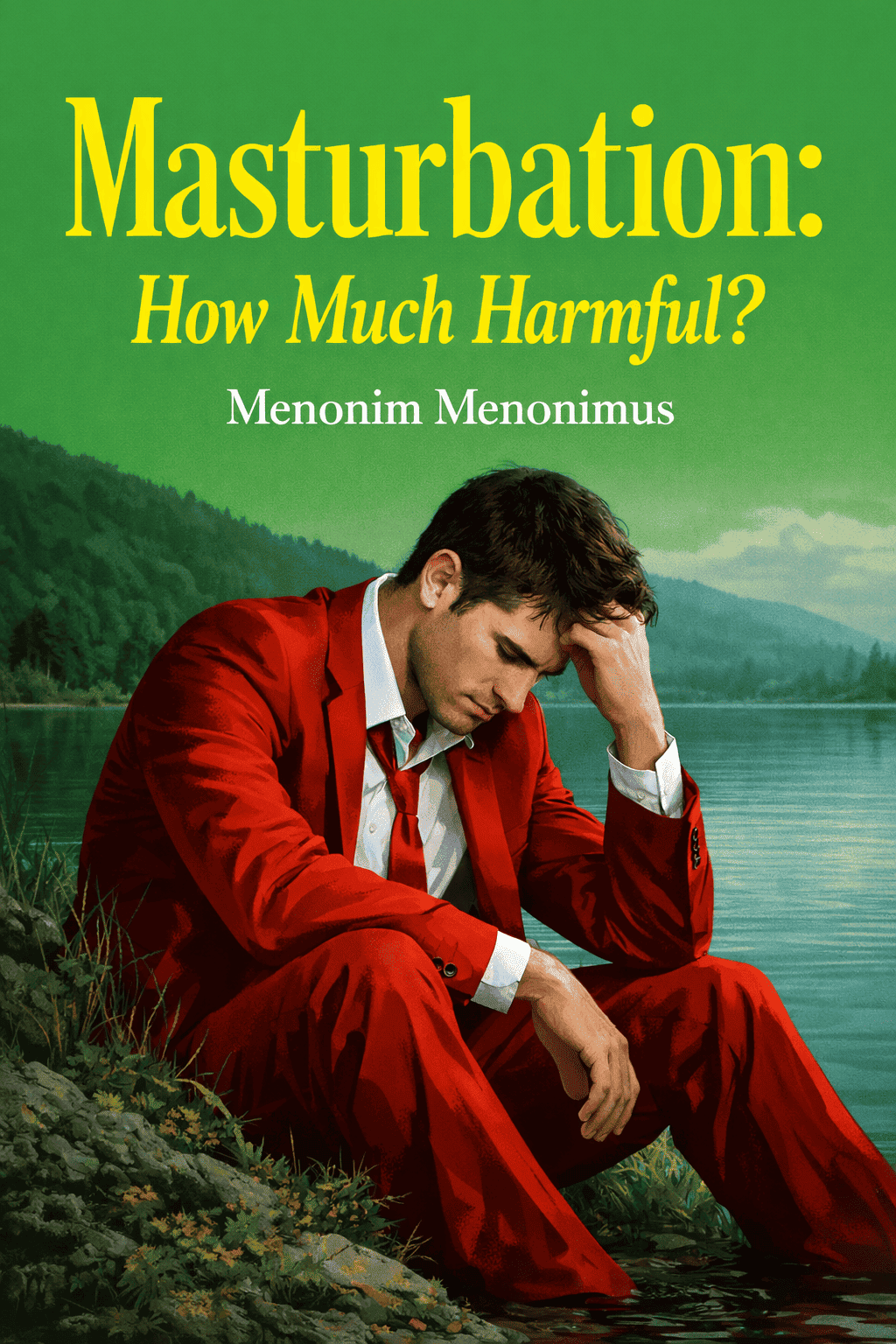
Masturbation: How Much Harmful?
Menonim Menonimus
Growhills
Masturbation: How Much Harmful? Written by Menonim Menonimus, Published by Growhills Publishing, Kamalpur, Barpeta (Assam)
New Edition
All Rights Reserved
Price:………………..
DTP by Assam Computec, Ghy-6
Printed at
Masturbation: How Much Harmful? (Text)
Table of Contents
Masturbation: How Much Harmful?
Introduction: Speaking About What Has Long Been Silenced
Approach and Method
What This Book Is — and Is Not
Audience and Purpose
Asking the Right Question
The Myth of Inherent Physical Harm
Psychological Harm: The Role of Shame and Conflict
Frequency, Control, and Behavioral Function
Masturbation as Emotional Regulation
Social and Relational Dimensions
Technology and Contemporary Risk Factors
Moral Fear Versus Empirical Evidence
A Measured Assessment of Harm
Frequently Asked Questions on Masturbation: How Much Harmful?
References
Note to Readers
About the Author
Introduction
Speaking About What Has Long Been Silenced
Masturbation is one of the most common human experiences and, at the same time, one of the most misunderstood. Across cultures, religions, and historical periods, it has been surrounded by silence, fear, moral judgment, and misinformation. Few subjects have generated so much anxiety while receiving so little calm, evidence-based discussion.
This book is written in response to that silence.
The aim of this work is neither to promote nor to condemn masturbation, but to understand it—biologically, psychologically, socially, ethically, and culturally. Where fear has dominated, this book seeks clarity. Where shame has prevailed, it offers reflection. Where claims of harm have been repeated, it asks for evidence.
Despite advances in medical science and psychology, many beliefs about masturbation remain rooted in pre-scientific assumptions. In some societies, it is still associated with illness, moral failure, spiritual decline, or social disorder. In others, it is trivialized or discussed without ethical depth. Both extremes—condemnation without evidence and discussion without responsibility—fail to serve human well-being.
The consequences of misunderstanding are real. They include:
- Unnecessary guilt and anxiety
- Confusion during sexual development
- Silence in families and educational institutions
- Moral conflict within religious and cultural frameworks
A society that cannot speak honestly about the body struggles to cultivate peace within the self and harmony among its members. This book argues that informed understanding is a foundation for personal dignity and social order.
Approach and Method
This book adopts an interdisciplinary approach, drawing upon:
- Medical and biological research
- Psychological and mental health studies
- Historical and cultural analysis
- Ethical and philosophical reflection
Scientific evidence is treated as essential but not sufficient. Human behavior is not merely biological; it is also shaped by meaning, values, relationships, and belief systems. Therefore, this book carefully distinguishes between:
- What science can demonstrate
- What culture and religion have taught
- What ethics demands in terms of balance, responsibility, and compassion
Throughout the book, claims are evaluated based on evidence rather than fear, and moral arguments are examined for their impact on human flourishing rather than their power to control behavior.
What This Book Is — and Is Not
This book is:
- Educational rather than explicit
- Critical rather than sensational
- Respectful of diverse moral and religious perspectives
- Concerned with well-being, self-control, and dignity
This book is not:
- A manual of sexual techniques
- A challenge to faith traditions
- A denial of moral responsibility
- An attempt to normalize excess or compulsion
Instead, it seeks a middle path: one that acknowledges human sexuality without surrendering ethical reflection, and that respects moral traditions without ignoring scientific reality.
You May Like:
Audience and Purpose
This book (Masturbation: How Much Harmful) is written for:
- Educated general readers
- Students and teachers
- Religious and community leaders
- Counselors, parents, and thoughtful individuals
It may be handy to those who have encountered conflicting messages—between science and tradition, desire and discipline, freedom and responsibility—and are seeking a rational, humane framework for understanding.
This book invites the reader not to abandon their values, but to examine them thoughtfully. It asks for openness without recklessness, discipline without cruelty, and morality without misinformation.
To speak honestly about the human body is not to undermine morality, but to strengthen it. Understanding, when guided by evidence and compassion, is not the enemy of virtue—it is its foundation. 0 0 0
Masturbation: How Much Harmful? (Text)
Asking the Right Question
Debates about masturbation have historically focused on whether it is harmful in itself. Contemporary scholarship suggests this framing is misleading. Human behaviors are rarely harmful or harmless in isolation; their effects depend on context, frequency, intention, psychological state, and social environment (WHO, 2010).
A more appropriate question is therefore not whether masturbation is harmful, but under what conditions it may become associated with harm. This chapter evaluates that question through empirical research and clinical understanding rather than moral panic.
The Myth of Inherent Physical Harm
For centuries, masturbation was believed to cause physical degeneration, weakness, and disease. These claims were prominent in pre-modern medical literature but have been decisively rejected by modern science (Laqueur, 2003).
Medical research demonstrates that:
- Masturbation is a normal part of human sexual physiology
- It does not damage reproductive organs
- It does not impair fertility or physical strength
- It is not associated with systemic disease
Major medical organizations, including the World Health Organization and the American Medical Association, recognize masturbation as a normal sexual behavior with no proven inherent physical harm (WHO, 2010; AMA, 2019).
Psychological Harm: The Role of Shame and Conflict
Psychological research shows that distress associated with masturbation is typically linked not to the behavior itself, but to negative moral beliefs and social condemnation surrounding it (Grubbs et al., 2019).
Studies indicate that:
- Individuals who view masturbation as morally wrong are more likely to report anxiety and guilt
- Psychological distress often correlates with perceived immorality, not frequency
- Shame-based sexual attitudes are associated with poorer mental health outcomes
Thus, psychological harm is better understood as a product of internal conflict and moral incongruence, rather than masturbation per se (Hook et al., 2015).
Frequency, Control, and Behavioral Function
There is no clinical definition of “normal” frequency of masturbation. Sexual desire varies significantly among individuals (Levine, 2003). Contemporary diagnostic frameworks emphasize control and functional impact, not frequency.
Masturbation may be considered problematic only when it:
- Causes significant distress
- Interferes with daily functioning
- Is experienced as compulsive and uncontrollable
The Diagnostic and Statistical Manual of Mental Disorders (DSM-5-TR) does not classify masturbation itself as a disorder; only patterns involving compulsivity and distress may warrant clinical attention (APA, 2022).
Masturbation as Emotional Regulation
Research in psychology suggests that masturbation can function as a short-term regulator of mood and stress, similar to other pleasure-based behaviors (Brody & Krüger, 2006). In moderation, this is not inherently harmful.
However, problems may arise when masturbation becomes the exclusive coping mechanism for emotional difficulties such as loneliness, depression, or anxiety. In such cases, clinicians focus on addressing the underlying emotional needs, not suppressing sexual behavior (Kafka, 2010).
Social and Relational Dimensions
Studies on intimate relationships indicate that masturbation does not inherently undermine relational satisfaction (Herbenick et al., 2014). In some contexts, it coexists with healthy intimacy.
Potential harm emerges when:
- Secrecy is driven by fear rather than privacy
- Partners lack communication or mutual understanding
- Cultural shame discourages honest dialogue
Social stigma surrounding masturbation has been shown to contribute to isolation and misinformation, particularly among adolescents and young adults (Santelli et al., 2017).
Technology and Contemporary Risk Factors
Recent research highlights how digital environments can intensify sexual habits through novelty and accessibility. Some individuals may experience reduced impulse control or unrealistic expectations as a result (Love et al., 2015).
Importantly, scholars emphasize that:
- Technology amplifies behavior; it does not create it
- Harm arises from excessive, unreflective use, not masturbation itself
- Education and self-regulation are more effective than prohibition
Moral Fear Versus Empirical Evidence
Historical analysis shows that masturbation was pathologized during periods of social anxiety, often without evidence (Laqueur, 2003). Modern sexology argues that moral fear has frequently caused greater psychological harm than the behavior it condemned.
Ethical evaluation grounded in evidence requires:
- Distinguishing moral belief from medical fact
- Prioritizing human well-being over punishment
- Recognizing bodily autonomy as a component of dignity
5.9 Conclusion: A Measured Assessment of Harm
Based on current scientific and psychological evidence:
- Masturbation is not inherently harmful
- Physical harm claims lack empirical support
- Psychological distress depends on shame, conflict, and loss of control
- Education and balanced self-regulation reduce harm more effectively than fear
A rational and humane approach to masturbation promotes mental health, personal responsibility, and social peace rather than repression. 0 0 0
Frequently Asked Questions on Masturbation: How Much Harmful?
1. What does “Masturbation: How Much Harmful?” actually mean?
The question Masturbation: How Much Harmful? seeks to understand whether masturbation causes physical, mental, or moral damage and, if so, to what extent. It does not assume that masturbation is entirely harmful or entirely harmless. Instead, it encourages a balanced evaluation based on frequency, intention, physical health, mental well-being, cultural values, and personal discipline. Most modern health perspectives agree that occasional masturbation is not inherently harmful, but excessive or compulsive behavior may create negative effects.
2. Is masturbation scientifically proven to be harmful?
From a scientific standpoint, masturbation is not proven to be harmful when practiced in moderation. Research in medical and psychological fields shows that it does not cause physical weakness, blindness, infertility, or mental illness. However, when people ask Masturbation: How Much Harmful?, science answers that harm may arise only when the habit becomes excessive, addictive, or interferes with daily functioning, relationships, productivity, or mental peace.
3. Can excessive masturbation harm physical health?
Excessive masturbation may lead to temporary physical issues such as fatigue, genital irritation, muscle pain, or disturbed sleep patterns. These effects are usually reversible with rest and moderation. The real concern in Masturbation: How Much Harmful? lies not in the act itself but in overindulgence, poor hygiene, lack of balance, and neglect of overall physical health.
4. Does masturbation affect mental health?
Occasional masturbation does not harm mental health and may even reduce stress for some individuals. However, if masturbation becomes compulsive, it can contribute to anxiety, guilt, low self-esteem, poor concentration, and social withdrawal. When discussing Masturbation: How Much Harmful?, mental health impact is often linked to loss of self-control rather than the act itself.
5. Can masturbation lead to addiction?
Masturbation itself is not addictive, but the dopamine response associated with sexual stimulation can lead to compulsive behavior in some individuals. If a person feels unable to stop, prioritizes masturbation over responsibilities, or experiences distress when trying to control the habit, then it becomes a behavioral concern. This is a key dimension of the question Masturbation: How Much Harmful?
6. Is masturbation harmful for students?
For students, masturbation becomes harmful only when it affects studies, focus, memory, discipline, or motivation. Occasional masturbation does not reduce intelligence or learning capacity. However, excessive indulgence combined with late nights, screen addiction, or guilt can indirectly harm academic performance. Thus, Masturbation: How Much Harmful? depends on balance and self-regulation.
7. Does masturbation cause weakness or loss of energy?
There is no scientific proof that masturbation causes permanent weakness. Semen production is a natural, continuous process. Temporary tiredness may occur after frequent activity, just as with any physical exertion. When people ask Masturbation: How Much Harmful?, the answer is that weakness comes from excess, poor nutrition, lack of sleep, and stress, not from moderation.
8. Can masturbation affect sexual performance?
Moderate masturbation does not harm sexual performance. In fact, it may help individuals understand their bodies better. However, excessive masturbation, especially with unrealistic stimulation, may reduce sensitivity or create difficulty in real-life intimacy. In this context, Masturbation: How Much Harmful? relates to patterns, expectations, and habits rather than the act alone.
9. Is masturbation harmful from a moral or spiritual perspective?
Moral and spiritual views on masturbation vary across cultures and religions. Some traditions discourage it due to ideals of self-control and purity, while others emphasize intention and moderation. When asking Masturbation: How Much Harmful?, moral harm is often linked to guilt, inner conflict, and deviation from personal values rather than physical damage.
10. Does masturbation affect memory or brain power?
There is no evidence that masturbation reduces memory or intelligence. However, excessive screen-based stimulation, lack of sleep, and mental preoccupation may indirectly affect concentration and recall. Therefore, Masturbation: How Much Harmful? should be understood in the broader context of lifestyle habits.
11. Is masturbation harmful for teenagers?
During adolescence, masturbation is often a natural response to hormonal changes. It is not physically harmful when moderate. The concern arises when teenagers lack guidance, develop guilt, consume inappropriate content, or lose focus on education and character development. Thus, Masturbation: How Much Harmful? for teenagers depends on awareness, moderation, and values.
12. Can masturbation cause infertility?
No medical evidence supports the claim that masturbation causes infertility. Sperm is constantly produced, and masturbation does not reduce reproductive capacity. In Masturbation: How Much Harmful?, infertility fears are largely myths rather than scientific facts.
13. Does masturbation affect eyesight?
The belief that masturbation weakens eyesight is a long-standing myth. There is no biological connection between masturbation and vision loss. This misconception often arises in discussions around Masturbation: How Much Harmful?, but it has no scientific basis.
14. Can masturbation cause depression?
Masturbation does not directly cause depression. However, compulsive behavior, guilt, loneliness, or moral conflict associated with the habit may contribute to low mood in some individuals. Therefore, in Masturbation: How Much Harmful?, emotional context plays a crucial role.
15. Is masturbation harmful for married individuals?
Masturbation is not inherently harmful in marriage, but secrecy, neglect of intimacy, or emotional distance can create relational issues. When discussing Masturbation: How Much Harmful?, the focus should be on communication, mutual respect, and emotional connection between partners.
16. How much masturbation is considered excessive?
No fixed number defines excess. Masturbation becomes excessive when it interferes with daily life, work, relationships, health, or self-respect. In essence, Masturbation: How Much Harmful? is determined by loss of control and negative consequences, not frequency alone.
17. Can masturbation reduce motivation and discipline?
If masturbation becomes habitual and impulsive, it may weaken self-discipline and motivation, especially when linked with instant gratification. This is why Masturbation: How Much Harmful? is often discussed in relation to personal growth and self-control.
18. Is complete abstinence necessary to avoid harm?
Complete abstinence is not medically required for health. Some individuals choose abstinence for spiritual or personal reasons, while others practice moderation. In Masturbation: How Much Harmful?, the healthiest approach is one that aligns with personal values and mental well-being.
19. How can one reduce excessive masturbation?
Reducing excessive masturbation involves lifestyle changes such as regular exercise, structured routines, limited screen exposure, meaningful social interaction, and mindfulness practices. Addressing stress and loneliness is central to answering Masturbation: How Much Harmful? constructively.
20. What is the conclusion on “Masturbation: How Much Harmful?”
The final answer to Masturbation: How Much Harmful? is that masturbation is not inherently harmful, but excess, compulsion, guilt, and imbalance can make it problematic. Moderation, self-awareness, ethical alignment, and healthy living determine whether it remains harmless or becomes damaging. 0 0 0
References
American Psychiatric Association (APA). (2022). DSM-5-TR: Diagnostic and Statistical Manual of Mental Disorders (5th ed., text rev.).
American Medical Association (AMA). (2019). Sexual health and well-being.
Brody, S., & Krüger, T. H. C. (2006). The post-orgasmic prolactin increase following intercourse is greater than following masturbation. Biological Psychology, 71(3), 312–315.
Grubbs, J. B., Perry, S. L., Wilt, J. A., & Reid, R. C. (2019). Pornography problems due to moral incongruence. Archives of Sexual Behavior, 48, 397–415.
Herbenick, D., Reece, M., Schick, V., Sanders, S. A., Dodge, B., & Fortenberry, J. D. (2014). Sexual behavior in the United States. Journal of Sexual Medicine, 11(4), 1050–1061.
Hook, J. N., Farrell, J. E., Davis, D. E., Van Tongeren, D. R., Griffin, B. J., & Grubbs, J. B. (2015). Self-forgiveness and hypersexual behavior. Journal of Sex & Marital Therapy, 41(3), 225–239.
Kafka, M. P. (2010). Hypersexual disorder: A proposed diagnosis. Archives of Sexual Behavior, 39, 377–400.
Laqueur, T. (2003). Solitary Sex: A Cultural History of Masturbation. Zone Books.
Levine, S. B. (2003). The nature of sexual desire. Journal of Sex & Marital Therapy, 29(3), 279–285.
Love, T., Laier, C., Brand, M., Hatch, L., & Hajela, R. (2015). Neuroscience of Internet pornography addiction. Behavioral Sciences, 5(3), 388–433.
Santelli, J. S., et al. (2017). Abstinence-only-until-marriage policies. Journal of Adolescent Health, 61(3), 273–280.
World Health Organization (WHO). (2010). Developing sexual health programmes: A framework for action. 0 0 0
Note to Readers
Dear Reader,
Thank you for choosing to engage with this book. Writing about a subject that has long been surrounded by silence, misunderstanding, and fear is never a simple task. This work was written with care, humility, and respect for diverse beliefs, guided by the hope that honest dialogue can reduce confusion and promote human dignity.
Masturbation: How Much Harmful? was not created to provoke controversy, but to invite reflection. It seeks to replace inherited myths with evidence, fear with understanding, and judgment with compassion. If this book has helped you think more clearly, feel less burdened by shame, or approach the topic with greater balance, then its purpose has been fulfilled in part.
Your feedback matters deeply. Thoughtful responses from readers help ensure that discussions around sensitive subjects remain humane, constructive, and grounded in truth. If Masturbation: How Much Harmful? encouraged you to reflect, question assumptions, or engage in healthier conversations with others, your words can inspire future readers to approach the book with openness rather than fear.
Positive and encouraging feedback also strengthens the possibility of responsible discourse in society. When readers speak honestly about how Masturbation: How Much Harmful? contributed to their understanding—whether medically, ethically, or personally—they help demonstrate that sensitive topics can be discussed without vulgarity or harm. Your reflections may help others realize that learning and moral reflection are not enemies, but partners.
If you feel moved to share your experience, please consider offering feedback that reflects the spirit of the book: thoughtful, respectful, and constructive. Even a few words of encouragement can help this work reach readers who are searching for clarity, balance, and peace of mind.
Finally, I hope that Masturbation: How Much Harmful? has contributed, in some small way, to a more informed and compassionate understanding of the human condition. Thank you for reading, for reflecting, and for participating in a conversation that values truth, dignity, and human well-being.
With sincere appreciation,
The Author