
The Science of Masturbation offers a calm, science-based exploration of a deeply misunderstood human experience, replacing fear and shame with clarity, balance, and self-respect. Rooted in biology, psychology, and ethical reflection, The Science of Masturbation invites thoughtful understanding rather than judgment or extremes.
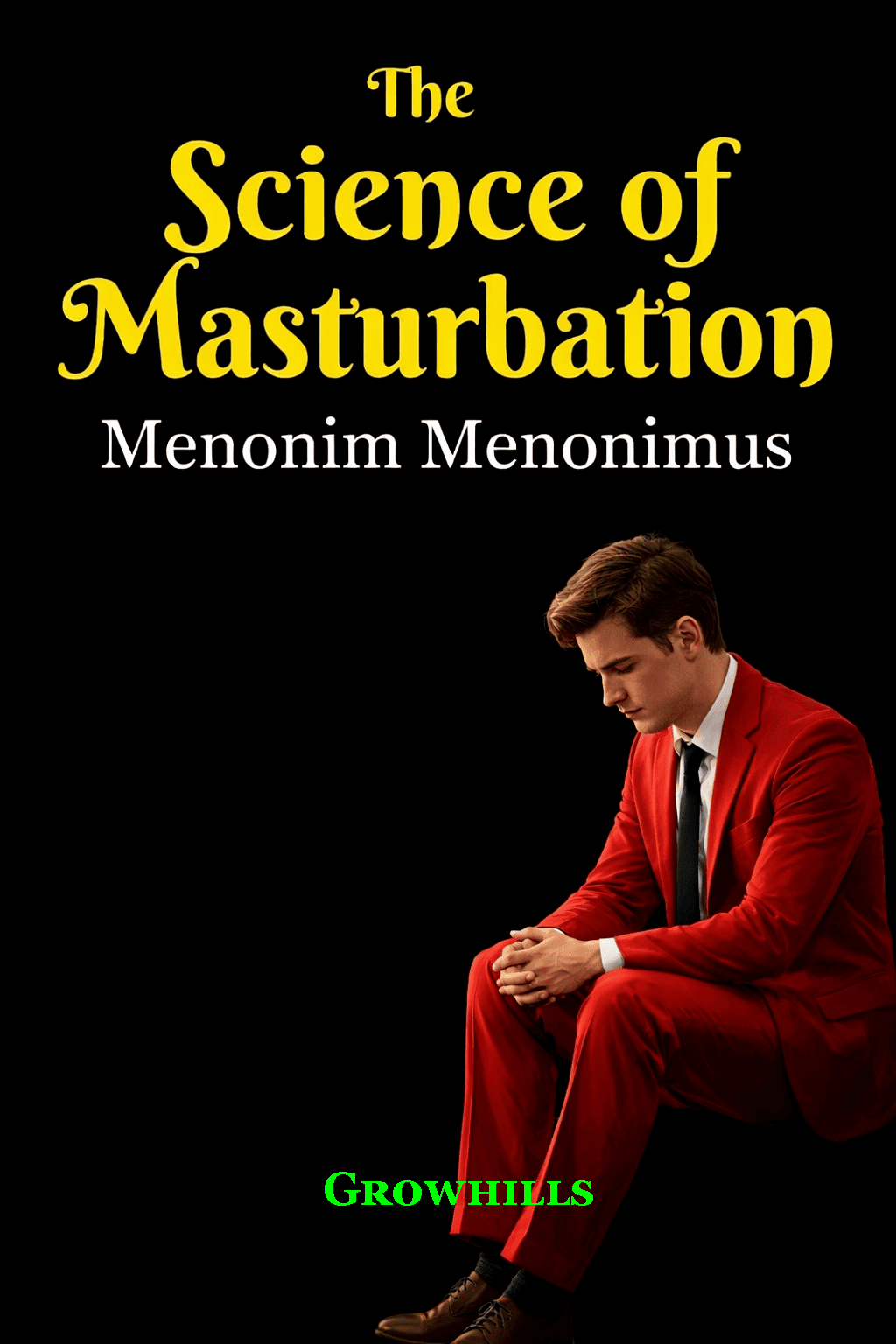
The Science of Masturbation
Menonim Menonimus
Growhills
The Science of Masturbation by Menonim Menonimus, published by Growhills Publishing, Kamalpur, Barpeta (Assam)
New Edition
All Rights Reserved
Price: ………..,
DTP: Adid Shahriar
Printed at
Preface
This book was born out of a simple yet important realization: many human beings live with unnecessary fear, confusion, and silence about their own bodies. Among the most misunderstood aspects of human life is masturbation—a subject often whispered about, judged harshly, or avoided entirely. When silence replaces knowledge, misunderstanding grows, and where misunderstanding grows, fear and shame follow.
The purpose of this book is not to provoke, promote, or oppose any ideology. Its purpose is to understand. Science teaches us that understanding is the foundation of health, balance, and responsible living. When we understand the body and mind, we are less likely to harm them—either through excess or through suppression.
This book approaches masturbation as a human experience, examined through multiple lenses: biology, psychology, emotional health, social conditioning, ethics, and conscious living. It does not seek to dictate behavior, but to illuminate awareness. It does not offer rigid rules, but invites thoughtful reflection. It respects cultural and personal values while encouraging readers to examine them in the light of knowledge.
Throughout these chapters, the reader is encouraged to move away from extremes—away from fear on one side and obsession on the other—and toward a balanced perspective. Balance is not weakness; it is intelligence in action. It allows desire to exist without domination and discipline to exist without cruelty.
Special care has been taken to use simple, clear, and respectful English so that readers from different backgrounds can engage with the subject comfortably. Medical exaggeration has been avoided. Moral pressure has been replaced with reflection. Wherever possible, science has been presented with humility, acknowledging both what is known and what remains individual and contextual.
This book is meant for thoughtful readers—students, adults, educators, parents, and anyone seeking clarity rather than confusion. It is especially for those who have carried silent questions for years and never found a calm, honest space in which to explore them.
If this book helps even one reader replace fear with understanding, guilt with self-respect, or confusion with clarity, it will have fulfilled its purpose.
Knowledge does not weaken character.
Understanding does not destroy values.
Awareness does not remove discipline—it refines it.
May this book serve as a gentle companion on the path toward informed, balanced, and compassionate living.
— The Author
Table of Contents
Chapter 1: Understanding Masturbation Through the Lens of Science
This opening chapter introduces masturbation as a natural human behavior studied by biology, medicine, psychology, and neuroscience.
Chapter 2: Human Sexual Biology and the Body’s Natural Design
This chapter explains the biological foundations of sexual response, making the reader comfortable with their own body through accurate knowledge.
Chapter 3: The Psychology of Masturbation
This chapter explores how the mind shapes sexual behavior, desire, and habits
Chapter 4: Myths, Misconceptions, and Scientific Truths
This chapter directly addresses common fears and misinformation using verified scientific understanding.
Chapter 5: Masturbation, Moderation, and Healthy Habits
This chapter introduces balance as the key principle in all human behaviour.
Chapter 6: Masturbation and Physical Health
This chapter reviews scientific findings related to the body and long-term health.
Chapter 7: Masturbation, Relationships, and Emotional Intelligence
This chapter places masturbation within the broader context of human connection.
Chapter 8: Spiritual, Ethical, and Philosophical Perspectives
This chapter respectfully explores inner values without promoting dogma.
Chapter 9: Education, Adolescence, and Responsible Awareness
This chapter focuses on learning, guidance, and prevention of fear-based ignorance.
Puberty and Natural Curiosity
Explains developmental changes gently and responsibly.
The Role of Parents and Educators
Encourages open, scientific, and compassionate education.
Chapter 10: A Scientific and Positive Path Forward
The concluding chapter synthesizes science, self-respect, and inspiration.
The Science of Masturbation: Text
Chapter 1: Masturbation as a Human Phenomenon
Masturbation is one of the most common human experiences, yet it remains one of the least openly discussed. Across time, geography, gender, and culture, human beings have engaged in self-touch as part of their relationship with their own bodies. Science approaches this subject not with fear or moral pressure, but with observation, evidence, and understanding.
When masturbation is seen as a human phenomenon, it moves out of secrecy and enters the realm of knowledge. It becomes a subject of biology, psychology, and self-awareness rather than confusion or shame. This chapter lays the foundation for the entire book by inviting the reader to observe human behavior calmly, honestly, and intelligently.
Human Curiosity, Touch, and Self-Discovery
Touch is the first language of the human nervous system. From infancy, human beings explore the world through touch, learning textures, sensations, and boundaries. This instinctive curiosity is not taught; it arises naturally from the body and brain.
As individuals grow, especially during adolescence and adulthood, bodily awareness deepens. Hormonal changes and neurological development increase sensitivity and self-awareness. Masturbation often appears during this phase as an extension of natural curiosity rather than deliberate intention.
From a scientific point of view, self-touch helps individuals understand their own bodily responses. It allows recognition of tension and relaxation, excitement and calm. When understood correctly, this process supports maturity rather than confusion.
Curiosity, when acknowledged and guided by awareness, evolves into understanding. When suppressed or feared, it often transforms into guilt or anxiety. Science encourages curiosity to be observed, not condemned.
Masturbation Beyond Moral Labels
Throughout history, masturbation has been surrounded by moral judgments shaped by culture, tradition, and social norms. These judgments have changed over time and differ widely across societies, showing that moral interpretation is not universal.
Science does not ask whether masturbation is good or bad. Instead, it asks how the body responds, how the brain functions, and how behavior relates to health and emotional balance. By removing moral extremes, masturbation can be viewed as a neutral human behavior.
Like eating, sleeping, or exercising, masturbation becomes meaningful only in the context of balance and awareness. It is neither something to glorify nor something to fear. Excess and suppression are both signs of imbalance, while understanding leads to moderation.
When moral pressure dominates without knowledge, individuals may experience unnecessary guilt. When scientific understanding replaces fear, individuals gain clarity and self-respect.
Observation, Acceptance, and Human Reality
One of the core principles of science is accepting reality before interpreting it. Masturbation exists as part of human behavior and has existed throughout history. Avoiding discussion does not remove the behavior; it only increases misunderstanding.
Acceptance does not mean encouragement, and understanding does not mean indulgence. Acceptance simply means acknowledging reality as it is. From this acknowledgment arises maturity, responsibility, and self-control.
When individuals accept their humanity without fear, they become capable of conscious choice. Knowledge allows discipline to grow naturally rather than through force or denial.
Science teaches that growth begins with honest observation. This principle applies equally to understanding the human body and mind.
Motivational Closing
Understanding begins where fear ends.
When observation replaces judgment, clarity replaces confusion.
By accepting human reality with awareness and responsibility, we take the first step toward balance, health, and inner freedom. 0 0 0
You May Like:
Chapter 2: The Biological Intelligence of the Human Body
The human body is not a random collection of organs but an intelligent system guided by balance, communication, and regulation. Every sensation, response, and rhythm within the body follows biological laws designed to preserve health and stability. Masturbation, when viewed through this lens, becomes part of the body’s natural functioning rather than an isolated or mysterious act.
Biology does not operate through guilt or approval. It operates through signals, feedback, and equilibrium. Understanding this biological intelligence helps individuals replace fear with respect and confusion with clarity.
Sexual Energy as a Biological Process
Sexual energy is not separate from the rest of human physiology. It is closely connected with growth, reproduction, vitality, and emotional expression. From a scientific perspective, sexual arousal is a natural response involving blood flow, nerve activation, and hormonal signaling.
As the body matures, especially during puberty and early adulthood, sexual energy becomes more noticeable. This is not a sign of weakness or excess; it is a sign of biological readiness and development. The body produces these sensations as part of its natural cycle, just as it produces hunger or sleepiness.
Masturbation often emerges as one way the body responds to accumulated sexual tension. When understood biologically, this response reflects regulation rather than disorder. The key factor is not the presence of sexual energy, but how consciously it is managed.
Biology teaches that energy seeks balance. When individuals understand this principle, they learn to respond thoughtfully rather than react impulsively.
The Role of the Nervous System and Hormones
The nervous system plays a central role in sexual response. Sensory nerves transmit signals from the body to the brain, while the brain interprets these signals and coordinates physical reactions. This communication happens continuously, often without conscious awareness.
Hormones such as dopamine, oxytocin, and endorphins influence desire, pleasure, relaxation, and emotional bonding. These chemicals are not created for indulgence; they are part of the body’s internal regulation system. They help reduce stress, support emotional stability, and maintain mental balance.
During masturbation, the release of certain neurochemicals can produce a temporary sense of relaxation or calm. This effect is similar to what occurs after exercise or deep breathing. Understanding this biological process helps remove exaggerated fears and unrealistic expectations.
Pleasure as a Regulatory Mechanism
Pleasure is often misunderstood as something dangerous or unnecessary. From a biological perspective, pleasure is a signal. It guides behavior, reinforces learning, and supports survival. The body uses pleasure to indicate relaxation, release, and satisfaction.
However, biology also teaches limits. When pleasure-seeking becomes disconnected from awareness, it can lose its regulatory function. This is why understanding pleasure scientifically is essential. Awareness allows pleasure to serve balance rather than control behavior.
The intelligent body does not demand constant stimulation. It seeks rhythm. When individuals listen to their body with awareness, they learn when to rest, when to act, and when to pause.
Balance, Feedback, and Self-Awareness
The human body constantly provides feedback. Fatigue, restlessness, calmness, and tension are all messages. Masturbation, like any bodily activity, fits into this feedback system. When aligned with self-awareness, it does not disturb health.
Problems arise not from biology itself, but from ignoring signals or acting without awareness. Science emphasizes listening rather than forcing. When individuals understand their biological rhythms, they naturally move toward moderation.
Self-awareness is the bridge between biology and wisdom. It allows the body’s intelligence to guide behavior rather than be overridden by fear or compulsion.
Motivational Closing
Your body is not your enemy; it is your guide.
When you understand its intelligence, balance replaces confusion.
Respecting biological rhythms leads to health, self-control, and inner confidence. 0 0 0
Chapter 3: The Brain, Desire, and Conscious Awareness
While the body plays an important role in sexual response, the true center of desire lies in the brain. Modern neuroscience confirms that sexuality is not merely a physical reaction but a complex interaction between thoughts, emotions, memories, and awareness. Understanding this interaction is essential for developing maturity, balance, and self-control.
This chapter explores how desire arises in the brain, how habits are formed, and how conscious awareness can transform automatic reactions into thoughtful choices.
How Thoughts Shape Sexual Experience
Desire does not begin in the body alone. It begins in the mind. Images, memories, imagination, and emotional states activate neural pathways that influence physical arousal. This is why the same physical stimulus can produce different reactions at different times.
The brain continuously interprets meaning. Stress, loneliness, curiosity, boredom, or affection can all influence sexual thoughts. Masturbation often reflects not only physical sensation but also mental activity shaped by daily life experiences.
When individuals recognize the role of thought, they gain an important insight: desire is not an external force that controls them. It is an internal process that can be observed, understood, and guided.
Awareness of thoughts brings freedom. Instead of being carried away by impulses, individuals learn to pause, reflect, and choose.
Dopamine, Habit, and Reward Circuits
The brain operates through reward systems designed to reinforce behavior. Dopamine is a key chemical involved in motivation, anticipation, and learning. When an activity produces pleasure or relief, the brain remembers it.
Masturbation, like many pleasurable activities, can activate this reward circuit. Over time, repetition strengthens neural pathways, making the behavior more familiar and easily triggered. This process is not unique to sexual behavior; it applies equally to eating habits, phone usage, or exercise routines.
Understanding this mechanism removes unnecessary fear. Habit formation is not a moral failure; it is a biological learning process. The challenge arises when behavior becomes automatic and disconnected from awareness.
When individuals understand how the brain learns, they can reshape habits consciously rather than struggle against them blindly.
Awareness Versus Automaticity
A significant difference exists between conscious choice and automatic reaction. Automaticity occurs when the brain responds without reflection, driven by habit or emotional triggers. Awareness introduces a pause between impulse and action.
This pause is powerful. It allows individuals to ask simple questions: What am I feeling right now? What do I truly need at this moment? Is this action aligned with my well-being?
Awareness does not suppress desire; it refines it. It transforms raw impulse into informed response. Through awareness, masturbation becomes one possible choice among many, not an uncontrollable urge.
The Role of Attention and Mindfulness
Attention shapes experience. Where attention goes, neural activity follows. When attention is scattered or overstimulated, impulses intensify. When attention is calm and focused, impulses soften.
Mindfulness, from a scientific perspective, means observing thoughts and sensations without immediate reaction. This practice strengthens self-regulation and emotional stability.
By cultivating attention, individuals learn to experience desire without being dominated by it. This skill extends beyond sexuality into every area of life.
Building a Conscious Relationship with Desire
Desire itself is not the problem. Unconsciousness is. When desire is understood, it becomes a source of information rather than conflict. The brain is capable of learning restraint, balance, and wisdom when guided by awareness.
Scientific studies show that conscious regulation improves mental health, emotional resilience, and overall well-being. This regulation grows naturally when individuals stop fighting their minds and start understanding them.
Motivational Closing
Your brain is not a battlefield; it is a classroom.
When desire is understood, it becomes manageable.
Through awareness, impulses transform into wisdom, and self-control becomes natural. 0 0 0
Chapter 4: Emotional Needs and Inner Regulation
Human behavior is rarely driven by the body alone. Beneath actions lie emotions—often unspoken, sometimes unrecognized. Masturbation, like many personal behaviors, is closely connected to emotional states such as stress, comfort-seeking, loneliness, curiosity, or the need for reassurance. Understanding this emotional dimension is essential for developing self-awareness and balance.
This chapter explores how emotions influence behavior and how inner regulation helps individuals respond wisely rather than react unconsciously.
Stress, Loneliness, and Comfort-Seeking
Modern life places continuous demands on the human nervous system. Work pressure, social expectations, uncertainty, and isolation can quietly accumulate as stress. The body and mind naturally look for ways to release this tension.
Masturbation may appear during such moments as a form of comfort-seeking. From a psychological perspective, this is not unusual. The brain associates certain activities with relaxation and temporary relief. This association does not indicate weakness; it reflects the human tendency to seek calm when overwhelmed.
Loneliness also plays a role. When emotional connection is lacking, individuals may turn inward for reassurance. Understanding this pattern helps shift the focus from self-criticism to emotional literacy.
Recognizing emotional triggers allows individuals to respond with care rather than habit.
Masturbation and Emotional Soothing
Emotional soothing refers to behaviors that help regulate internal states. The nervous system seeks balance between stimulation and calm. Activities such as deep breathing, walking, listening to music, or resting serve this purpose. Masturbation may also function in this way for some individuals.
The key distinction lies in awareness. When soothing is conscious, it supports well-being. When it becomes the only coping mechanism, emotional needs remain unmet.
Science emphasizes that emotions require recognition, not avoidance. When individuals understand what they are feeling, they can choose healthier and more varied ways to restore balance.
Temporary Relief Versus Emotional Resolution
It is important to understand the difference between relief and resolution. Relief eases discomfort for a short time. Resolution addresses the root cause. Masturbation may provide temporary relief from tension or restlessness, but it does not replace emotional connection, communication, or self-care.
When individuals mistake relief for resolution, patterns repeat. When they recognize the distinction, growth begins. Emotional maturity develops through listening to inner signals rather than silencing them.
Emotional Awareness and Self-Compassion
Many people struggle not because of their behaviors, but because they judge themselves harshly. Shame blocks understanding. Compassion opens the door to learning.
Emotional awareness means observing feelings without labeling them as good or bad. Self-compassion means responding to those feelings with patience rather than punishment.
Psychological research shows that self-compassion improves emotional regulation, reduces anxiety, and supports long-term well-being. When individuals treat themselves with understanding, habits naturally become more balanced.
Building Healthy Emotional Regulation
Inner regulation is the ability to manage emotions consciously. It develops through awareness, reflection, and practice. When individuals expand their emotional vocabulary, they reduce the need for unconscious coping behaviors.
Healthy regulation does not eliminate desire or emotion. It integrates them into a broader framework of self-care, connection, and purpose.
When emotional needs are acknowledged, behavior becomes more flexible and intentional.
Motivational Closing
Your emotions are messages, not mistakes.
When you listen with compassion, balance replaces confusion.
Understanding your inner world is the foundation of true self-mastery. 0 0 0
Chapter 5: Social Conditioning and Cultural Narratives
Human understanding does not develop in isolation. From childhood onward, beliefs about the body, desire, and sexuality are shaped by family, education, religion, media, and social silence. Masturbation, more than many other human behaviors, has been deeply influenced by cultural narratives rather than scientific explanations.
This chapter examines how society conditions perception, how silence shapes fear, and how awareness allows individuals to separate inherited beliefs from personal understanding.
Cultural Silence and Social Anxiety
In many societies, masturbation is rarely discussed openly. Silence often replaces education. When a subject is surrounded by silence, curiosity does not disappear; instead, it operates in secrecy.
Social silence creates anxiety. Individuals may feel alone in their experiences, assuming that their thoughts or behaviors are abnormal. Without reliable information, imagination fills the gap, often with fear or misinformation.
From a sociological perspective, silence functions as a powerful teacher. It communicates that a topic is forbidden or dangerous, even when no evidence supports such conclusions. This unspoken messaging deeply influences self-perception.
When silence is replaced by calm discussion, anxiety naturally decreases. Knowledge restores a sense of normalcy.
Religion, Tradition, and Interpretation
Religious and traditional teachings have played a major role in shaping attitudes toward masturbation. It is important to recognize that interpretations vary widely across cultures, time periods, and schools of thought.
Many traditions emphasize discipline, restraint, and moral order. Over time, these principles were sometimes applied rigidly, without scientific understanding of the body or mind. As a result, masturbation became associated with fear rather than reflection.
Science does not challenge spiritual values; it complements them by explaining biological and psychological realities. When tradition is interpreted with awareness and compassion, it can coexist with scientific knowledge.
Understanding the difference between core values and cultural interpretation allows individuals to honor their beliefs without harming their mental well-being.
The Burden of Shame
Shame is not born within the body. It is learned. It arises when natural experiences are labeled as unacceptable without explanation. Shame thrives in secrecy and weakens self-trust.
Psychological research shows that chronic shame is linked to anxiety, low self-esteem, and emotional suppression. When individuals believe something is wrong with them, they struggle to develop healthy self-regulation.
Removing shame does not mean removing responsibility. It means replacing fear with understanding. Responsibility grows best in an environment of clarity, not condemnation.
Unlearning Inherited Fear
Many beliefs are inherited rather than examined. Unlearning does not require rejection of culture; it requires reflection. Individuals can ask whether a belief supports health, balance, and dignity.
When fear-based narratives are questioned, space opens for personal wisdom. This process is gradual and respectful, not rebellious.
Media, Misinformation, and Social Comparison
In the modern world, the media strongly influence perception. Conflicting messages—ranging from extreme condemnation to exaggerated glorification—create confusion.
Without guidance, individuals may compare themselves unrealistically to others or to artificial portrayals. Science offers grounding by focusing on real human biology and psychology rather than fantasy.
Critical thinking is essential. When individuals learn to evaluate information calmly, they become less vulnerable to distortion and pressure.
Reclaiming Personal Understanding
Social narratives are powerful, but they are not absolute. Each individual has the capacity to develop a personal understanding grounded in knowledge, values, and self-respect.
When people distinguish between social conditioning and lived reality, they gain confidence. This confidence supports moderation, responsibility, and emotional stability.
Understanding society helps individuals live consciously within it rather than unconsciously controlled by it.
Motivational Closing
You are not defined by inherited fear.
When knowledge replaces silence, dignity replaces shame.
Understanding culture empowers you to live with clarity, balance, and self-respect. 000
Chapter 6: Health Science and Medical Perspectives
Health science approaches masturbation as part of overall human physiology and behavior. Medical research does not rely on fear, exaggeration, or moral pressure. Instead, it examines how the body responds, how systems interact, and how health is maintained over time. When viewed through this lens, masturbation becomes a topic of health awareness rather than anxiety.
This chapter clarifies what modern medicine observes, what it confirms, and what it does not claim, helping readers separate evidence-based understanding from speculation.
Masturbation and Physical Health
From a medical standpoint, masturbation involves normal bodily processes such as muscle contraction, blood circulation, nerve stimulation, and relaxation responses. These processes are similar to those activated during other forms of physical or emotional release.
Research indicates that, for most healthy individuals, masturbation does not cause physical harm. It does not weaken the body, damage organs, or reduce vitality when practiced in moderation. The human body is designed to regulate itself through complex feedback mechanisms.
Temporary fatigue or relaxation following sexual release is a normal physiological response, similar to what occurs after exercise or emotional relief. These sensations are signals, not signs of damage.
The Nervous System, Relaxation, and Stress Response
Medical science recognizes that the nervous system plays a central role in stress regulation. When the body is under stress, the sympathetic nervous system becomes active. Activities that promote calm activate the parasympathetic nervous system, which supports relaxation and recovery.
Masturbation may activate relaxation responses through neurochemical changes, including the release of endorphins. These responses can reduce temporary stress and promote calm. However, medicine emphasizes that no single activity should become the sole method of stress management.
Healthy stress regulation includes sleep, movement, emotional expression, and social connection. Masturbation may be one element among many, not a replacement for comprehensive self-care.
Masturbation and Reproductive Health
Medical discussions often address concerns about reproductive health. Scientific evidence shows that masturbation does not reduce fertility or damage reproductive capacity in healthy individuals. The reproductive system continuously produces cells and maintains balance through natural biological processes.
In some medical contexts, masturbation is even used diagnostically or therapeutically, demonstrating that it is not inherently harmful. However, medical science also emphasizes moderation and individual health conditions.
Individual Differences and Medical Context
Health outcomes are never identical for everyone. Age, physical condition, mental health, medication, and lifestyle all influence bodily responses. What feels supportive for one person may feel draining for another.
This is why medicine avoids universal rules and instead encourages individuals to observe their own bodies. Listening to fatigue, discomfort, or emotional changes is part of responsible health awareness.
Medical science promotes personalization rather than rigid standards.
What Science Confirms and What It Does Not
It is important to understand the limits of scientific claims. Medicine confirms that masturbation is a common human behavior and, in moderation, is not physically harmful for most individuals.
Science does not claim that masturbation is a cure for illness, nor does it claim that it is necessary for health. It is neither a miracle nor a menace. It is simply one behavior among many that interact with health depending on context and awareness.
When exaggerated claims are removed, clarity emerges. Health improves not through extremes, but through balance and informed choice.
Health Awareness and Preventive Care
Medical science emphasizes prevention through awareness. Paying attention to sleep patterns, energy levels, mood changes, and overall functioning helps individuals maintain balance.
If masturbation interferes with daily life, work, relationships, or emotional well-being, medical guidance encourages reflection and, if needed, professional consultation. Seeking help is a sign of responsibility, not weakness.
Health science supports proactive care rather than silent struggle.
Motivational Closing
Health grows in understanding, not in fear.
When science replaces exaggeration, balance replaces anxiety.
Listening to your body with awareness is the foundation of lifelong well-being. 000
Chapter 7: Moderation, Self-Regulation, and Personal Agency
Human well-being depends not on suppression or excess, but on balance. Every natural impulse—hunger, rest, movement, curiosity, or desire—functions best when guided by awareness. Masturbation, viewed through this principle, becomes a matter of self-regulation rather than conflict.
This chapter focuses on moderation as a life skill and personal agency as the foundation of healthy choice.
Understanding Excess and Deficiency
In biology and psychology, imbalance creates discomfort. Excess leads to fatigue and dependency, while deficiency leads to frustration and tension. Health emerges when behavior aligns with bodily and emotional needs.
Masturbation itself is neither excessive nor deficient by definition. Its impact depends on frequency, intention, and context. When it supports relaxation without disrupting daily functioning, it remains within balance. When it replaces responsibilities, relationships, or emotional growth, imbalance appears.
Recognizing imbalance requires honesty, not judgment. Awareness allows individuals to adjust gently rather than react harshly.
Habit Formation and Self-Observation
Habits form through repetition and reinforcement. The brain learns what brings comfort or relief and stores that information for future use. This learning process is neutral; it reflects adaptability, not weakness.
Self-observation interrupts automatic patterns. When individuals observe when, why, and how a habit appears, they gain insight into underlying needs. This insight creates choice.
Observation is more effective than control. Control resists behavior; observation understands it. Understanding naturally reshapes habits over time.
Discipline Without Suppression
Discipline is often misunderstood as force or denial. In reality, discipline means alignment with long-term well-being. Suppression creates inner conflict, while intelligent discipline builds stability.
When individuals choose moderation consciously, they are not denying desire; they are guiding it. This guidance strengthens confidence and self-trust.
True discipline feels calm, not tense. It arises from clarity, not fear.
Personal Agency and Conscious Choice
Personal agency is the ability to choose intentionally rather than react automatically. It develops when individuals recognize that they are not controlled by impulses, emotions, or habits.
The agency does not demand perfection. It allows flexibility. Some days require rest; others require restraint. Conscious choice adapts to circumstances rather than enforcing rigid rules.
When people experience agency, they feel empowered. They act because they understand, not because they are compelled.
Building a Balanced Inner Environment
Balance is supported by a meaningful life. Purpose, creativity, physical activity, emotional connection, and rest all reduce the pressure placed on any single behavior.
When life feels full, compulsions weaken naturally. When life feels empty, habits intensify. This is not a moral issue; it is a human one.
By enriching daily life, individuals reduce dependence on repetitive coping behaviors.
Motivational Closing
You are not ruled by impulse; you are guided by awareness.
When moderation replaces extremes, strength replaces struggle.
Personal agency grows where understanding and self-respect meet. 000
Chapter 8: Masturbation Across the Human Lifespan
Human experience is not static. The body, mind, and emotional world change continuously from childhood to old age. Masturbation, like many aspects of human behavior, takes different meanings and forms across the lifespan. Understanding these changes helps individuals respond to themselves with maturity rather than confusion.
This chapter explores how bodily awareness, responsibility, and self-understanding evolve through different stages of life.
Adolescence and Bodily Awakening
Adolescence is a period of rapid biological and psychological change. Hormonal activity increases, the nervous system becomes more sensitive, and self-awareness intensifies. During this phase, curiosity about the body naturally grows.
Masturbation often appears during adolescence as part of self-exploration. From a scientific perspective, this reflects developmental processes rather than abnormal behavior. The adolescent brain is still learning regulation, impulse control, and emotional balance.
Education plays a crucial role at this stage. When young people receive accurate information, they develop confidence and responsibility. When information is absent, fear and misinformation take its place.
Understanding adolescence as a learning phase encourages guidance rather than judgment.
Early Adulthood, Responsibility, and Integration
In early adulthood, individuals begin integrating sexuality with identity, work, relationships, and long-term goals. The body is typically at peak vitality, and emotional needs become more complex.
Masturbation during this stage often reflects personal choices shaped by lifestyle, stress levels, and relational status. Awareness becomes especially important as responsibilities increase and habits can either support or distract from growth.
Scientific understanding emphasizes integration rather than separation. Sexuality is not an isolated compartment; it interacts with mental focus, energy levels, and emotional health.
When balanced, self-awareness supports productivity and emotional stability.
Relationships, Parenthood, and Changing Priorities
As individuals enter committed relationships or parenthood, priorities often shift. Emotional connection, shared responsibility, and time management influence personal habits.
Masturbation during this phase may take on different meanings. For some, it becomes less frequent due to emotional fulfillment or time constraints. For others, it remains a private aspect of self-care.
The key factor is communication and emotional maturity. Understanding personal needs while respecting relational boundaries promotes harmony rather than conflict.
Sexual health science emphasizes adaptability rather than rigid expectations.
Aging, Health, and Self-Understanding
With aging, hormonal levels, physical energy, and sexual responsiveness may change. These changes are natural and vary widely among individuals.
Masturbation in later life may become less physically driven and more connected to relaxation, comfort, or emotional well-being. Science recognizes that sexual expression does not abruptly end with age; it evolves.
Acceptance becomes especially important during this stage. Comparing oneself to earlier phases creates unnecessary frustration. Understanding the body’s changing rhythms supports peace and dignity.
Respecting the Body’s Changing Signals
The aging body communicates clearly through fatigue, recovery time, and sensitivity. Respecting these signals is a form of wisdom.
Health science encourages gentle adaptation rather than resistance. When individuals adjust expectations and practices, well-being is preserved.
Lifelong Learning and Self-Compassion
Across all stages of life, one principle remains constant: awareness grows with understanding. Masturbation, when viewed across the lifespan, reflects human adaptability rather than fixed identity.
Self-compassion allows individuals to respond appropriately to each phase without shame or denial. Growth does not mean repeating the past; it means responding to the present wisely.
Motivational Closing
Life is a journey of change, not a fixed pattern.
When understanding grows with age, balance grows with grace.
Respecting each stage of life brings maturity, peace, and self-respect. 000
Chapter 9: Relationships, Intimacy, and Emotional Maturity
Human beings are relational by nature. While masturbation is a personal experience, it does not exist in isolation from emotional bonds, intimacy, and shared life. Understanding how self-awareness interacts with relationships is essential for emotional maturity and mutual respect.
This chapter explores how masturbation relates to intimacy, communication, boundaries, and emotional intelligence within human relationships.
Self-Knowledge and Mutual Respect
A healthy relationship begins with self-knowledge. Understanding one’s own body, emotions, and needs allows individuals to communicate honestly and respectfully with others. Masturbation, when approached with awareness, can contribute to this understanding rather than replace connection.
Self-knowledge does not diminish intimacy; it enhances it. Individuals who understand themselves are better able to express needs, respect differences, and avoid unrealistic expectations.
Mutual respect grows when partners recognize that personal experiences and shared intimacy serve different emotional purposes.
Masturbation and Partnered Life
In partnered life, masturbation often raises questions rooted in misunderstanding rather than reality. Some view it as competition with intimacy, while others see it as a private form of self-care.
From a scientific and relational perspective, masturbation and partnered intimacy fulfill different needs. Intimacy involves emotional connection, communication, and shared presence. Masturbation is individual and inward-focused.
Problems arise not from the behavior itself, but from secrecy, assumptions, or lack of communication. Emotional maturity allows partners to discuss boundaries openly and calmly.
Privacy, Honesty, and Boundaries
Privacy is a natural human need. Honesty is a relational need. Emotional maturity lies in balancing both.
Healthy boundaries are not walls; they are agreements. When partners respect each other’s privacy while maintaining trust, emotional safety grows.
Communication does not require disclosure of every detail, but it benefits from transparency in values and expectations.
Emotional Intelligence in Intimate Life
Emotional intelligence is the ability to recognize emotions in oneself and others and respond thoughtfully. In intimate life, this skill prevents misunderstanding and resentment.
Jealousy, insecurity, or fear often arise when individuals lack information or confidence. Understanding human behavior scientifically reduces unnecessary suspicion and strengthens trust.
Emotionally intelligent individuals focus on connection rather than control. They listen more than they accuse, and they seek understanding rather than dominance.
Masturbation, Comparison, and Unrealistic Expectations
Comparison is a major source of dissatisfaction in relationships. Media portrayals and myths can distort expectations about desire, frequency, or performance.
Masturbation sometimes becomes entangled with comparison, especially when influenced by unrealistic images or narratives. Awareness helps separate fantasy from reality.
Healthy intimacy is built on presence, affection, and emotional attunement, not performance standards.
Growing Together Through Understanding
Relationships evolve as individuals evolve. When both partners approach sexuality with curiosity, respect, and openness, growth becomes shared rather than divisive.
Scientific understanding supports empathy. Empathy supports connection. Connection supports lasting intimacy.
Motivational Closing
Intimacy deepens where understanding replaces fear.
When self-awareness meets mutual respect, relationships grow stronger.
Emotional maturity transforms personal understanding into shared harmony. 000
Chapter 10: Masturbation in the Digital Age
The digital age has transformed human attention, desire, and behavior in unprecedented ways. Access to screens, instant stimulation, and endless novelty has altered how the brain experiences pleasure and how habits are formed. Masturbation, once primarily guided by bodily sensation and imagination, is now often influenced by digital content.
Understanding this shift is essential for protecting mental health, attention, and emotional balance in the modern world.
Stimulation, Screens, and the Modern Brain
The human brain evolved in an environment of limited stimulation. In contrast, digital platforms provide constant novelty, rapid visual changes, and instant reward. This overstimulation affects how desire is triggered and sustained.
When masturbation becomes closely linked to screens, the brain may learn to associate arousal with external visual input rather than internal sensation or emotional connection. Over time, this association can reduce sensitivity to natural cues.
Neuroscience shows that excessive stimulation can fatigue reward circuits, making simple experiences feel less satisfying. Awareness of this process helps individuals make informed choices rather than react unconsciously.
Pornography, Novelty, and Attention
Pornographic content is designed to maximize novelty and intensity. Each new image or scene activates anticipation and dopamine release. While the brain responds naturally to novelty, repeated exposure can train attention toward constant change.
This does not mean that all exposure leads to harm, but it highlights the importance of moderation and awareness. When novelty becomes the primary driver of arousal, patience, focus, and emotional presence may weaken.
Understanding the difference between stimulation and satisfaction is crucial. Satisfaction arises from presence and meaning, not endless novelty.
The Impact on Imagination and Sensitivity
Imagination is a natural function of the brain. When external imagery dominates, imagination may become less active. Sensitivity to subtle sensations can also decrease.
Reclaiming imagination and bodily awareness supports healthier engagement with desire. This shift does not require rejection of technology, but conscious interaction with it.
Mindful Consumption and Digital Boundaries
Mindful consumption means choosing how and when to engage with digital content rather than being pulled automatically. Boundaries protect attention, energy, and emotional health.
Science shows that intentional limits improve focus, mood, and self-regulation. When individuals decide in advance how they use technology, habits become more stable and less compulsive.
Digital awareness strengthens personal agency. It restores choice where automation once ruled.
Reclaiming Natural Sensitivity
Natural sensitivity refers to the body’s ability to respond to simple cues such as touch, emotion, and presence. This sensitivity is not lost permanently; it can be restored through attention and moderation.
Reducing overstimulation allows the nervous system to recalibrate. Activities such as physical movement, creative expression, and real human connection support this process.
When sensitivity returns, desire becomes calmer, clearer, and more integrated into daily life.
Technology as a Tool, Not a Master
Technology itself is neutral. Its impact depends on how it is used. When technology serves awareness, it supports learning and connection. When it dominates attention, it weakens self-regulation.
The goal is not rejection, but mastery. Mastery means using tools consciously, in alignment with values and well-being.
Motivational Closing
Your attention is your most valuable resource.
When awareness guides technology, freedom replaces compulsion.
By choosing consciously in the digital age, you protect clarity, balance, and inner strength. 000
Chapter 11: Ethical Reflection and Inner Values
Ethics is not merely a set of rules imposed from outside; it is an inner dialogue about how one chooses to live with dignity, responsibility, and self-respect. When applied to personal behaviors such as masturbation, ethics becomes a matter of awareness, intention, and alignment with one’s values rather than fear or rigid control.
This chapter invites readers to reflect inwardly and develop a personal ethical framework grounded in understanding rather than conflict.
Personal Values and Inner Alignment
Every individual carries a unique set of values shaped by upbringing, culture, experience, and reflection. Ethical living begins when actions align with these values. Misalignment creates inner tension; alignment creates peace.
Masturbation, like any personal behavior, can be examined through simple questions:
Does this behavior support my physical health?
Does it respect my emotional well-being?
Does it align with the kind of person I wish to become?
When actions are examined honestly, ethics becomes a guide rather than a burden. Inner alignment allows individuals to act with clarity instead of confusion.
Responsibility Toward Body and Mind
Ethical responsibility includes caring for the body and mind as interconnected systems. The body provides signals; the mind interprets meaning. Ignoring either leads to imbalance.
From an ethical standpoint, self-respect means neither neglecting bodily needs nor overindulging impulses. It means responding intelligently. Science supports this balanced approach, showing that long-term well-being arises from moderation and awareness.
Responsibility also includes recognizing when a behavior interferes with focus, relationships, or growth. Adjusting behavior in response to such signs is an ethical act, not a punishment.
Intention Versus Compulsion
Ethics places strong emphasis on intention. An intentional act is chosen with awareness. A compulsive act is driven without reflection.
When masturbation is guided by intention—such as relaxation or self-awareness—it remains within ethical balance. When driven by compulsion, it signals a need for attention and care.
Recognizing this difference empowers individuals to restore choice and dignity.
Freedom, Choice, and Self-Respect
True freedom is not the absence of limits; it is the ability to choose wisely. Ethics supports freedom by clarifying what truly serves well-being.
Self-respect grows when individuals honor their own boundaries. This respect does not come from denial, but from conscious decision-making. When people trust themselves to choose responsibly, inner confidence strengthens.
Ethical reflection transforms rules into understanding and discipline into self-care.
Integrating Biology, Mind, and Values
Human life is multidimensional. Biology provides impulses, the mind provides interpretation, and values provide direction. Ethics emerges when these dimensions are integrated rather than divided.
Science explains how the body works. Psychology explains how habits form. Ethics explains how to live with integrity. When these perspectives work together, inner conflict dissolves.
Integration allows individuals to live whole, balanced lives without internal struggle.
Motivational Closing
Ethics is the art of living in harmony with yourself.
When values guide behavior, clarity replaces conflict.
Inner alignment transforms understanding into dignity, purpose, and peace. 000
Chapter 12: Toward a Science-Based, Compassionate Understanding
Knowledge matures when it leads not to fear or pride, but to wisdom. Throughout this book, masturbation has been explored not as a controversy, but as a human experience viewed through science, psychology, culture, ethics, and conscious living. The purpose of this final chapter is to integrate these perspectives into a unified understanding that supports dignity, balance, and inner peace.
Science does not aim to control human life; it aims to illuminate it. Compassion does not weaken discipline; it strengthens it. When both work together, understanding becomes transformative.
Replacing Fear with Understanding
Fear thrives in ignorance. When people lack accurate information, imagination often creates exaggerated dangers or unrealistic expectations. Science dissolves such fear by explaining how the body and mind function naturally.
Understanding masturbation as a biological and psychological process removes unnecessary anxiety. It allows individuals to observe themselves calmly rather than judge themselves harshly. This shift from fear to understanding is the first step toward maturity.
When fear fades, responsibility becomes easier. People act wisely not because they are afraid, but because they understand the consequences and respect themselves.
Living Consciously in a Complex World
Modern life is fast, stimulating, and demanding. Conscious living means slowing down internally even when the world moves quickly. It means making choices aligned with long-term well-being rather than short-term impulse.
Masturbation, like many personal behaviors, reflects how consciously one lives. Awareness allows individuals to recognize emotional needs, manage habits, and adapt to changing life circumstances.
Conscious living is not perfection. It is attentiveness. It is the willingness to learn from experience rather than repeat patterns blindly.
Knowledge as Liberation
Education liberates when it empowers individuals to think clearly and act responsibly. Throughout history, ignorance has controlled behavior more effectively than truth ever could.
Scientific knowledge about the body and mind frees individuals from myths, shame, and inherited fear. It allows them to replace rigid rules with thoughtful judgment.
Liberation does not mean excess. It means choice. When people understand themselves, they choose balance naturally.
Compassion Toward Self and Others
Compassion is a scientific necessity as much as an ethical one. Research shows that self-compassion improves emotional regulation, resilience, and mental health. Harsh self-judgment weakens growth; understanding strengthens it.
When individuals treat themselves with compassion, they extend the same understanding to others. This creates healthier relationships, calmer societies, and more honest dialogue.
Compassion does not excuse irresponsibility. It supports learning and correction without shame.
Integration as the Path Forward
This book has emphasized integration—of body and mind, science and values, awareness and discipline. Integration resolves inner conflict. Division creates struggle.
When biology is understood, desire is no longer frightening. When emotions are acknowledged, behavior becomes flexible. When values guide choices, life gains direction.
Integration is the highest form of self-knowledge.
Final Motivational Message
Knowledge enlightens the mind.
Compassion steadies the heart.
Awareness guides the will.
When science and understanding walk together, life becomes balanced, dignified, and free. 000
Note to Readers
Dear Readers,
Thank you for taking the time to explore The Science of Masturbation. Writing this book has been a journey of understanding, compassion, and careful reflection, and it is my heartfelt hope that it has offered you clarity, insight, and balance. The Science of Masturbation was created not to shock, judge, or provoke, but to illuminate a subject that has long been misunderstood and surrounded by silence. My aim has been to present the science, psychology, and emotional understanding behind human behavior in a way that is respectful, simple, and inspiring.
If this book (The Science of Masturbation’) has helped you replace confusion with understanding, fear with knowledge, or guilt with self-respect, I would be deeply grateful for your feedback. Your positive and thoughtful reviews will not only encourage me as an author but will also help other readers discover The Science of Masturbation and approach this important subject with openness and confidence.
Sharing your reflections, insights, and experiences is a way to continue the conversation we began in these pages. When you leave a review or write to share your thoughts, you help create a community of readers who value learning, self-awareness, and personal growth. The Science of Masturbation was written with the hope of fostering understanding, and your feedback can extend that mission far beyond the pages of this book.
I invite you to share your genuine impressions, your moments of insight, or even questions that arose while reading the book ‘The Science of Masturbation’. Each comment, review, or message of support strengthens the purpose of this book and encourages more people to approach human biology, emotions, and behavior with curiosity, respect, and intelligence.
From the bottom of my heart, thank you for reading The Science of Masturbation, for reflecting on its messages, and for taking the time to inspire others through your feedback. Your words are invaluable, and your support makes the journey of sharing knowledge meaningful and lasting.
With warm regards and deepest gratitude,
The Author
Frequently Asked Questions:
- What is the primary objective of the book The Science of Masturbation?
The primary objective of The Science of Masturbation is to present a clear, evidence-based understanding of masturbation by examining it through biological, psychological, medical, and sociocultural perspectives, free from myths, stigma, and moral panic. - Is The Science of Masturbation written from a medical or moral standpoint?
The Science of Masturbation is written strictly from a scientific and academic standpoint, relying on established research in medicine, neuroscience, psychology, and public health rather than moral, religious, or ideological judgments. - Who is the intended audience of The Science of Masturbation?
The Science of Masturbation is intended for adult readers, educators, health professionals, researchers, and general readers who seek an informed, rational, and scientifically grounded understanding of human sexual behavior. - Does The Science of Masturbation address common myths and misconceptions?
Yes, The Science of Masturbation systematically identifies, analyzes, and corrects widespread myths and misconceptions by comparing popular beliefs with verified scientific evidence. - How does The Science of Masturbation explain the biological mechanisms involved?
The Science of Masturbation explains the biological mechanisms by detailing the role of the nervous system, hormones, brain chemistry, and physiological responses involved in sexual arousal and self-stimulation. - Does The Science of Masturbation discuss psychological effects and mental health aspects?
Yes, The Science of Masturbation explores psychological dimensions such as stress relief, emotional regulation, compulsive behavior, guilt, anxiety, and the impact of cultural conditioning on mental well-being. - Is addiction or excessive behavior covered in The Science of Masturbation?
The Science of Masturbation addresses excessive or compulsive patterns by distinguishing between healthy sexual behavior and problematic habits, using clinical definitions and contemporary psychological research. - How does The Science of Masturbation approach cultural and historical perspectives?
The Science of Masturbation examines how different cultures and historical periods have interpreted masturbation, highlighting how social norms, religious doctrines, and medical theories have evolved over time. - Does The Science of Masturbation provide guidance on healthy practices?
The Science of Masturbation provides general, non-prescriptive guidance rooted in health science, emphasizing balance, self-awareness, consent, and overall physical and psychological well-being. - What makes The Science of Masturbation distinct from other books on the topic?
The Science of Masturbation stands apart by its comprehensive scope, academic rigor, neutral tone, and commitment to presenting masturbation as a normal human behavior analyzed through verified scientific knowledge rather than sensationalism or ideology..
The End